


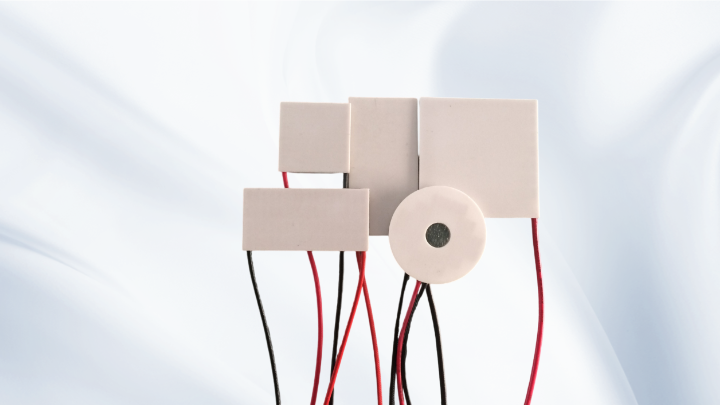
Evaluating a Thermoelectric Cooler Manufacturing Enterprise for TEC Module Design
Evaluating a Thermoelectric Cooler Manufacturing Enterprise for TEC Module Design
Introduction
A Thermoelectric Cooler Manufacturing Enterprise supports customers at the intersection of thermal engineering, electronics packaging, and production reliability. For buyers and design engineers, the real question is not simply who can supply a Peltier module, but who can help translate an application requirement into a workable thermoelectric cooling design. That requires clear discussion of heat load, cold-side target temperature, hot-side conditions, available voltage and current, heatsink performance, and mechanical fit. A capable manufacturing partner should ask these questions early, because a TEC module datasheet alone does not guarantee success in a real system.
What a Thermoelectric Cooler Manufacturing Enterprise Needs to Know About Your Application
Before a Peltier cooler can be selected, the application must be described in thermal terms. The key inputs are the heat load to be removed, the desired cold-side temperature, the expected ambient temperature, the available input voltage and current, and the space available for the TEC module and heatsink. It is also important to define whether the system must cool, heat, or maintain temperature across a range of conditions. A TEC that works at one operating point may behave differently when the ambient rises or when the heat load changes.
A professional manufacturer will also ask about installation. Is the TEC module clamped, bonded, or mounted inside an enclosure? What thermal interface material is used? How flat are the mating surfaces? These details affect thermal resistance and can change the difference between a stable design and a marginal one. For semiconductor cooling applications, the cold side may be small, but the hot side still needs a robust path to ambient. The manufacturing partner should be able to review the thermal stack rather than only quote a TEC model.
Using Qmax and ΔTmax Correctly in TEC Module Selection
Qmax is the maximum cooling capacity of a TEC module at zero temperature difference between the cold side and hot side, under specified test conditions. ΔTmax is the maximum temperature difference the module can achieve at zero heat load. These are boundary values, not normal operating points. In most practical thermoelectric cooling systems, the module operates somewhere between these limits, with a real heat load and a real temperature difference. Qmax and ΔTmax should not be treated as values that can be achieved at the same time.
Datasheets also list Imax and Vmax, which relate to the module electrical design and reference conditions. Engineers should use these parameters to compare TEC modules, but they must adjust the design to the actual hot-side temperature, input voltage, input current, and cooling capacity required. A Peltier module that appears adequate by Qmax alone may be too small once heat load and temperature difference are considered. Conversely, an oversized module may increase power consumption and require a larger heatsink. The Thermoelectric Cooler Manufacturing Enterprise should explain the test conditions behind the datasheet so the customer can make a fair comparison.
Heat Dissipation and Thermal Management in Thermoelectric Cooling
Thermoelectric cooling moves heat from the cold side to the hot side, but it does not remove heat from the system. The hot side must reject both the pumped heat load and the electrical power consumed by the TEC module. If heat dissipation is insufficient, the hot-side temperature rises, the achievable temperature difference falls, and the system may enter thermal runaway. This is why a heatsink, fan, cold plate, or other thermal path is not an accessory. It is part of the cooling capacity calculation.
Thermal resistance between the TEC module and the heatsink matters, as does the thermal interface material and mounting pressure. A good design considers the entire path from the cold-side load to ambient. In a Peltier cooler for an enclosure, for example, the cold side may cool air or a small plate, while the hot side rejects heat to the outside. The manufacturer should help define the hot-side temperature assumption and check that the heatsink performance is consistent with that assumption. Practical thermal management often has more influence on final performance than the TEC module alone.
Custom TEC Modules and the Role of the Thermoelectric Cooler Manufacturing Enterprise
Standard TEC modules cover many applications, but some designs need a custom Peltier module. Custom work may involve module dimensions, ceramic selection, internal element arrangement, lead wire configuration, sealing, or mounting features. A Thermoelectric Cooler Manufacturing Enterprise should be able to discuss these options without promising performance that has not been validated. The right approach is to define the electrical and thermal requirements first, then evaluate whether a standard TEC module or a custom design is more appropriate.
Application categories also guide selection. Miniature TEC modules may suit compact optoelectronic or sensor cooling, while multi-stage TEC modules may be considered when a larger temperature difference is required. High-temperature TEC modules may be relevant when the hot-side environment is demanding. These categories are useful entry points, but the final choice still depends on heat load, hot-side temperature, input power, and mechanical constraints. KKG supports miniature, high-temperature, multi-stage, and custom TEC categories for engineers who need application-focused thermoelectric cooling support.
Practical Evaluation Checklist for a Thermoelectric Cooler Manufacturing Enterprise
When evaluating a supplier, ask whether the team can review your thermal requirement rather than only provide a catalog number. A useful partner will request the heat load, target cold-side temperature, expected hot-side temperature, ambient conditions, available voltage and current, heatsink data, and mechanical drawing. They should explain how Qmax, ΔTmax, Imax, and Vmax relate to your operating point, and they should be clear about which values are datasheet references and which are system-level estimates.
Also ask about thermal interface recommendations, mounting tolerances, sealing needs, and incoming inspection. For prototype work, request a sample evaluation plan that includes temperature measurements at the cold side and hot side, power consumption, and stability over time. For production, discuss consistency of electrical resistance, dimensional control, and traceability. These questions help separate a component seller from a Thermoelectric Cooler Manufacturing Enterprise that can support design and manufacturing.
Frequently Asked Questions
What is the difference between Qmax and ΔTmax?
Qmax is the maximum cooling capacity at zero temperature difference. ΔTmax is the maximum temperature difference at zero heat load. They describe different limits of the same TEC module and are measured under specified conditions.
Can a TEC module reach Qmax and ΔTmax at the same time?
No. Qmax occurs at zero temperature difference, while ΔTmax occurs at zero heat load. Real operation sits between these limits and depends on heat load, hot-side temperature, input power, and heatsink performance.
Why does hot-side temperature matter so much?
The hot side must reject both the heat load and the TEC electrical power. If heat dissipation is poor, the hot-side temperature rises and the achievable cooling capacity or temperature difference decreases. Heatsink design and thermal resistance are therefore central to thermoelectric cooling performance.
When should I consider a custom TEC module?
Consider a custom Peltier module when standard dimensions, sealing, lead configuration, or mounting features do not fit the mechanical design, or when the thermal requirement needs a different internal configuration. The custom design should be based on defined operating conditions and validated by measurement.
Conclusion
Selecting a TEC module is a system design task, not a single-parameter comparison. Qmax and ΔTmax are useful reference values, but actual cooling capacity depends on heat load, hot-side temperature, cold-side temperature, input voltage, input current, thermal resistance, and installation quality. A Thermoelectric Cooler Manufacturing Enterprise adds value when it helps engineers define these conditions, review heat dissipation, and choose a standard or custom TEC module that fits the application. Whether the project uses a miniature Peltier cooler, a multi-stage TEC, or a high-temperature module, the same engineering discipline applies: define the thermal problem first, then select the thermoelectric cooling solution.
SEO Meta Information
Meta Title: Thermoelectric Cooler Manufacturing Enterprise Guide
Meta Description: Learn how to evaluate a Thermoelectric Cooler Manufacturing Enterprise, specify TEC modules, manage heat load, and design reliable thermoelectric cooling systems.
