





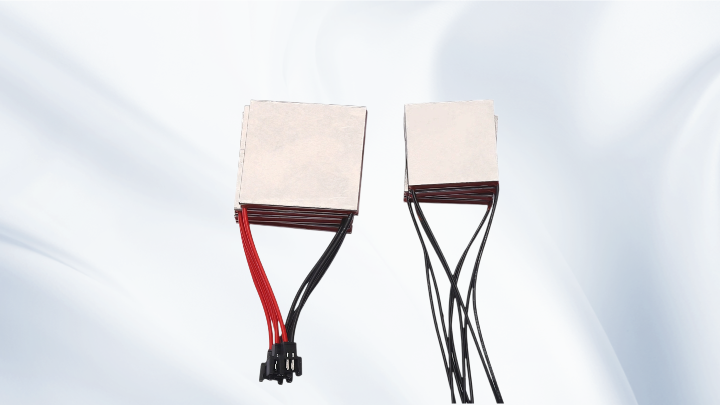
How to Choose the Most Stable Thermoelectric Cooler for Precision Thermal Control
What Makes a Thermoelectric Cooler Stable?
When engineers refer to the most stable thermoelectric cooler, they are not only talking about steady temperature output. Stability in thermoelectric cooling means the ability to maintain a precise target temperature under fluctuating heat loads, varying ambient conditions, and long-term operation. A stable Peltier cooler should deliver repeatable performance without thermal drift or premature failure. In this guide, we explore the engineering principles that contribute to stability and how to evaluate a thermoelectric cooler for your specific application.
A thermoelectric cooler (TEC), also known as a Peltier module, operates based on the Peltier effect. When DC current flows through the module, heat is transferred from the cold side to the hot side. The temperature difference across the module and its cooling capacity depend on the current, voltage, thermal loads, and the efficiency of heat dissipation. But stability goes beyond these basic relationships—it involves material quality, module construction, thermal management, and control scheme.
Understanding Key Parameters: Qmax, ΔTmax, Imax, Vmax
To assess the stability of a thermoelectric cooler, you must first understand its datasheet parameters. Qmax represents the maximum heat absorption capacity when the temperature difference (ΔT) is zero. ΔTmax is the maximum temperature difference the module can achieve when there is no heat load. Imax and Vmax are the current and voltage that produce ΔTmax. It is important to note that Qmax and ΔTmax cannot be achieved simultaneously. In practice, a TEC operates somewhere between these extremes, and the actual cooling capacity and temperature difference depend on the heat load and hot-side temperature.
For applications that require the most stable thermoelectric cooler, you usually need to operate the module at a point well below its maximum ratings. Running near Imax increases internal heating and reduces efficiency, which can lead to thermal instability and a shorter lifespan. A well-designed system will select a TEC with adequate Qmax and ΔTmax margins so that the controller can operate in a linear, predictable region.
Hot-Side Heat Dissipation: The Key to Stability
One of the most overlooked factors in thermoelectric cooling stability is hot-side heat dissipation. A TEC pumps heat from the cold side to the hot side; if that heat is not removed effectively, the hot-side temperature rises. This directly reduces the achievable temperature difference across the module and makes the cold-side temperature drift. Therefore, the most stable thermoelectric cooler is only stable when paired with a properly designed heatsink, fan, or liquid cooling system.
The thermal resistance of the hot-side heatsink is crucial. A lower thermal resistance means the hot side stays closer to ambient temperature, allowing the TEC to maintain a consistent cold-side temperature. For dynamic heat loads, the heatsink must also have enough thermal mass to absorb transient spikes without significant temperature swings. Consider using a cross-flow heatsink or a vapor chamber for high-heat-flux applications. In addition, thermal interface materials (TIMs) must be applied correctly—filled with high thermal conductivity and minimal thickness—to reduce contact resistance and ensure stable operation.
Control Strategies for Maintaining Stable Temperature
To achieve the most stable thermoelectric cooler performance, the TEC must be driven by a suitable control algorithm. Simple on/off control causes temperature oscillation and reduces the effective life of the module. Instead, engineers use proportional-integral-derivative (PID) controllers that adjust the current continuously based on feedback from a temperature sensor. A well-tuned PID loop can maintain the cold side to within ±0.01 °C in controlled environments.
Another important control aspect is current polarity and ripple. TECs are bidirectional devices; reversing the current changes the direction of heat pumping. This is useful for both heating and cooling, but it complicates stability. For precise control, the driver should provide a smooth DC current with minimal ripple. High-frequency ripple causes internal temperature fluctuations that your sensor might not average correctly. Use a low-noise linear power stage or a high-frequency PWM with appropriate filtering to ensure that the module receives clean power.
Reliability Factors: Thermal Cycling, Humidity, and Solder Fatigue
The long-term stability of a thermoelectric cooler depends heavily on its construction and reliability. Thermal cycling—repeated heating and cooling—induces mechanical stress on the solder joints and the semiconductor legs. Over time, this stress can cause micro-cracks and eventually module failure. The most stable thermoelectric cooler is one that has been designed with high-quality solder alloys, robust substrate materials, and proper thermal stress management.
Humidity is another enemy of TEC stability. If the module is operated at low temperature and exposed to humid air, condensation can form on the cold side. This moisture can cause electrical shorts, corrosion, and a decline in thermal performance. In applications where condensation is possible, the module should be hermetically sealed or the entire system should be enclosed in a dry environment. Additionally, the external surface of the cold side should be treated to minimize moisture ingress.
When selecting a TEC for a demanding application, ask about the manufacturer’s reliability testing. Look for modules that have been thermal cycled and soaked at high temperatures to ensure that the solder joints can withstand your expected operating profile. A reputable manufacturer like KKG can provide detailed reliability data and recommendations for derating.
How to Identify the Most Stable Thermoelectric Cooler for Your Application
Choosing the most stable thermoelectric cooler is not simply about picking the most expensive module. The real key is matching the TEC characteristics to your system requirements. Start by defining the heat load, the required temperature difference, and the hot-side temperature. Then calculate a coefficient of performance (COP) curve to find the operating point that gives you the best efficiency and stability.
In many cases, a larger TEC operated at a fraction of its maximum current will be more stable than a smaller TEC operated at high current. The lower current reduces the internal temperature gradient and the associated thermal stress. Also, consider multi-stage TEC modules when you need a very high ΔT but moderate cooling power. Multi-stage modules are more complex and have different reliability considerations, but they can provide exceptionally stable low temperatures if properly housed and controlled.
Finally, do not overlook the thermal interface between the TEC and your load. Even the best TEC will produce poor stability if the contacts are loose or the thermal grease is degraded. Use quality thermal paste (or thermal epoxy) and ensure uniform pressure across the module surfaces. A pressure of about 2–4 MPa is typical for TEC assemblies; too little pressure leads to high thermal resistance, too much can crack the module.
Frequently Asked Questions
1. Can a thermoelectric cooler achieve both Qmax and ΔTmax at the same time?No. Qmax is measured when there is no temperature difference (ΔT=0), and ΔTmax is measured when the heat load is zero. In real operation, the module operates between these two extremes. Operating at maximum current may temporarily produce a high ΔT, but it also generates excessive internal heat and reduces efficiency.
2. What does 'temperature stability' mean in TEC applications?Temperature stability refers to the ability of the cold side to stay within a narrow tolerance range (for example, ±0.01°C) over a given period, even under varying heat loads or ambient conditions. It is influenced by the TEC's control loop, heat dissipation, and the module's internal quality.
3. How do I choose the right TEC for my application?First, calculate the steady-state heat load (including active heat generation and parasitic heat leaks) and the required temperature difference. Then select a TEC whose Qmax is 1.5 to 2 times the actual heat load, and whose ΔTmax is at least 1.5 times the required temperature difference. This gives the controller room to hold the temperature constant.
4. Why is my thermoelectric cooler not stable?Instability commonly comes from inadequate hot-side heat dissipation, an undersized heatsink, poor thermal interface material, or a poorly tuned PID controller. Check the hot-side temperature, the thermal contact, and the control parameters. Also verify that the power supply is clean and there is no ripple.
5. Can I use a TEC to heat, not just cool?Yes. Reversing the current direction makes the cold side hot and the hot side cold. In precision thermal control, this is useful for stabilizing above ambient temperature. However, keep in mind that the module's performance is not symmetric—heating is usually less efficient than Peltier cooling due to resistive heating.
Conclusion
The most stable thermoelectric cooler is not a single product model but the result of careful system engineering. Attention to operating point, hot-side cooling, control strategy, thermal interfaces, and environmental protection all contribute to a stable, long-lasting thermoelectric cooling solution. By understanding the principles outlined in this guide and selecting a robust TEC module from an experienced manufacturer like KKG, you can achieve the precise thermal stability your application demands.
