





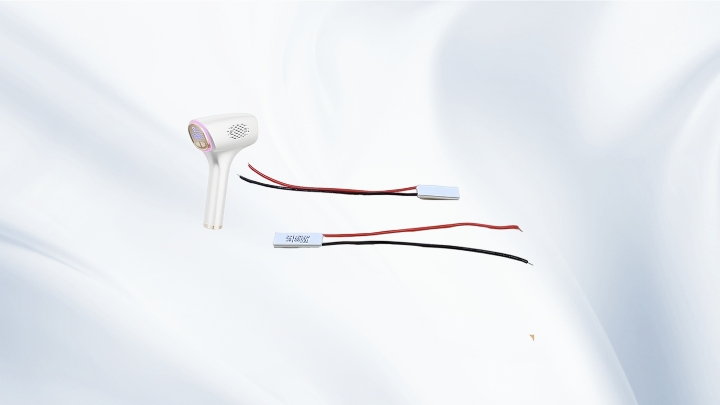
How to Choose Thermoelectric Cooler: A Guide to KKG Thermoelectric Coolersthermoelectric cooler
Understand Your Cooling Requirements
Before selecting a thermoelectric cooler, define the cooling capacity needed. This is measured in watts and depends on the heat load you need to manage. For instance, if you're cooling a small electronics enclosure, you might need a 50W unit like the KKG-12706. Overestimating increases cost; underestimating leads to inadequate cooling. Calculate the heat generated by your equipment and add a safety margin of 20-30%.
Consider the Size and Form Factor
KKG thermoelectric coolers come in various sizes, from compact modules (e.g., 40x40mm) to larger ones (e.g., 62x62mm). The size affects both the cooling power and the installation space. Measure your mounting area and ensure the TEC fits properly. Also, think about the temperature differential (ΔT) required. If you need to cool below ambient significantly, a multi-stage TEC might be necessary, but single-stage modules like KKG-12703 offer a good balance for moderate cooling.
Evaluate Power and Efficiency
Check the operating voltage and current of the TEC. Most KKG modules operate at 12V or 24V. Higher voltage generally means more cooling power but also more heat generation. The coefficient of performance (COP) is crucial: divide cooling capacity by input power. For example, a KKG module with 60W cooling and 80W input has a COP of 0.75. Look for modules with a COP above 1.0 for energy savings when possible.
Assess Build Quality and Durability
KKG thermoelectric coolers are known for using high-quality ceramics and robust soldering, which ensures long lifespan. Verify the maximum operating temperature and thermal cycling capability. For demanding applications, choose modules with a higher temperature rating (e.g., 200°C hot side). Also, consider if you need a moisture-resistant coating for humid environments.
Select the Right Heat Sink and Fan
A TEC alone cannot cool; it needs a heat sink and fan to dissipate heat from the hot side. KKG modules pair well with standard heat sink assemblies. Ensure the thermal resistance of the heat sink is low enough to keep the hot side cool, which directly impacts the cold side temperature. A typical rule: for every watt of cooling, you need 2-3 times more heat dissipation capacity.
Check Compatibility with Power Supply
Your power supply must match the TEC's requirements. Use a regulated DC power supply that can deliver the maximum startup current (often higher than steady-state). KKG modules typically have a startup surge of 1.5-2 times the rated current. Consider using a PWM controller for precise temperature control.
Review Application-Specific Features
Some KKG thermoelectric coolers offer special features like integrated temperature sensors or stacked configurations for higher ΔT. If your application requires rapid cooling or precise stability, look for modules with enhanced response time. Also, check the flatness and parallelism of the module surfaces to ensure good thermal contact.
Common Questions
1. Can I use a KKG thermoelectric cooler to cool a CPU?Yes, but you need a proper heat sink and sufficient cooling capacity. For a typical CPU, a 60-80W TEC might be needed, but be aware of condensation issues and power demands.
2. How do I prevent condensation on the cold side?Apply thermal grease and insulate the cold side with foam or a conformal coating. Use a controller to maintain the cold side temperature above the dew point.
3. What is the typical lifespan of a KKG TEC?With good quality and proper usage, KKG modules can last over 200,000 hours. However, thermal cycling and moisture can reduce lifespan; ensure proper handling.
4. Can I run a KKG TEC on a battery?Yes, if the battery can supply the required current. For a 12V, 6A module, a 12V battery with at least 8A capacity is recommended. Consider using a battery management system.
- #ThermoelectricCooler #ThermoelectricPeltier #CustomCoolingSolution #TEC #peltierModul #tecCooler
- #ElectronicsCooling #IndustrialCooling #TECModule #CoolingSolution #Semiconductor #TEC1127
- #thermoelectricCoolerPeltier #PeltierTech #CoolingModule #ElectronicsCooling #LaserCooling
- #peltierCoolingModule #peltierEffectCooler #coolerWithPeltier #peltierDeviceCooler
- #thermoelectricPeltierDevice #peltierModuleCooler #ThermoelectricGenerator #TEGSupplier #Peltier
- #SemiconductorCooling #PeltierCooler #SemiconductorChip #CoolingTechnology #PeltierEffect
- #ThermalManagement #peltierDevice #thermoElectric #thermoelectricModule #thermoelectricCoolingSystem
- #thermoelectricPowerGenerator #elementPeltier #peltierCoolingElement #tecCoolingSystem
- #thermoelectricCoolingDevice #thermoelectricCoolingElement #MedicalDeviceCooling #FactoryDirect
