


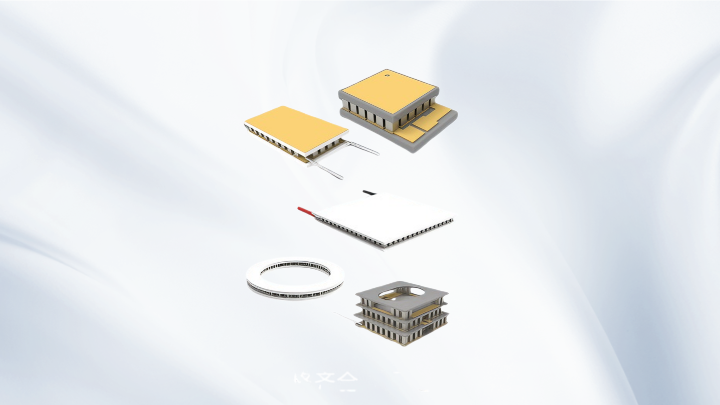
How to Select a Premium Thermoelectric Cooler: A Technical Guide
How to Select a Premium Thermoelectric Cooler: A Technical Guide
When your application demands precise temperature control, high reliability, or compact cooling, a Premium Thermoelectric Cooler can be the ideal solution. Unlike standard Peltier coolers, premium TEC modules are designed with tighter tolerances, better materials, and enhanced manufacturing quality to deliver consistent performance in demanding environments. However, selecting the right module is not simply a matter of picking the highest cooling capacity. It requires a careful balance of electrical, thermal, and mechanical factors. This guide walks through the engineering considerations that matter most when choosing a premium thermoelectric cooler.
Understanding Premium Thermoelectric Coolers
All thermoelectric coolers operate on the Peltier effect: passing current through a semiconductor junction creates a temperature difference, absorbing heat on one side (cold side) and releasing it on the other (hot side). A premium thermoelectric cooler distinguishes itself through enhanced material purity, improved module construction, and rigorous testing. These factors lead to higher cooling capacity per unit area, better efficiency, and longer service life compared to commodity Peltier modules. Premium TECs are often used in medical devices, laser systems, automotive sensors, and telecommunications equipment where failure is not an option.
It is important to recognize that a premium module does not guarantee success on its own. The overall system design—including heat sink, interface materials, and power supply—determines whether the module can achieve its rated performance. Therefore, the selection process must begin with a clear understanding of the application’s thermal requirements.
Key Parameters for Selecting a Premium Thermoelectric Cooler
When reviewing datasheets for a premium thermoelectric cooler, several parameters define its capabilities. These include Qmax, ΔTmax, Imax, Vmax, and AC resistance. Each parameter provides a piece of the puzzle, but none should be considered in isolation.
Qmax and ΔTmax: The Fundamental Trade-off
Qmax is the maximum heat pumping capacity of the module, typically specified at a ΔT of zero (i.e., when the cold side and hot side are at the same temperature). ΔTmax is the maximum temperature difference the module can achieve, usually specified at zero heat load. A critical point often misunderstood: Qmax and ΔTmax cannot be achieved simultaneously. In real operation, as the temperature difference increases, the cooling capacity decreases. If you need both a large ΔT and a high heat load, you may need to consider a multi-stage TEC or a different cooling technology.
For a premium thermoelectric cooler, the datasheet will provide a performance curve showing cooling capacity versus ΔT at a specific hot-side temperature. This curve is your primary tool for matching the module to your heat load. Start by estimating your actual heat load (in watts) and the required temperature difference between the cold side and the ambient. Then find a module whose curve provides the necessary Q at that ΔT, with some margin for uncertainty.
Imax, Vmax, and Electrical Considerations
Imax is the maximum current at which the module can operate, and Vmax is the corresponding voltage at that current. These values are typically specified at ΔTmax. The electrical resistance of the module determines the relationship between voltage and current. A premium TEC will have a well-controlled resistance, ensuring predictable power consumption.
When selecting a module, you must ensure your power supply can deliver the required current and voltage. Operating a TEC at a lower current than Imax reduces cooling capacity but also improves efficiency (coefficient of performance). Many designs run at 50–70% of Imax to balance cooling power and power consumption. However, if your application requires rapid cooling or high ΔT, you may need to operate closer to Imax. Always verify that the power supply can handle the inrush current and that the module’s wiring and connectors are rated for the current.
Thermal Management and Heat Dissipation
The performance of any thermoelectric cooler is heavily dependent on how effectively heat is removed from the hot side. If the hot side cannot dissipate heat, the cold side will not reach the desired temperature, and the module may overheat and fail. Therefore, heat dissipation is as important as the module selection itself.
The hot-side temperature (Th) directly affects the achievable cold-side temperature (Tc). A lower Th allows a larger ΔT for the same input power. To keep Th low, you need a heat sink with low thermal resistance and sufficient airflow. The thermal interface between the TEC and the heat sink must be optimized using a high-quality thermal interface material (TIM). Even a thin layer of poor TIM can add significant thermal resistance and degrade performance.
When designing the thermal stack, consider the entire path from the cold side to the ambient: the cold-side interface, the TEC itself, the hot-side interface, the heat sink, and the ambient air. Each element contributes to the overall thermal resistance. A premium thermoelectric cooler may have a low internal resistance, but if the external thermal path is poor, the system will underperform. Forced-air cooling is common, but for high-power applications, liquid cooling or heat pipes may be necessary.
Practical Considerations for System Integration
Beyond the datasheet parameters, several practical factors influence the success of your design.
Mounting and mechanical stress: TEC modules are ceramic-based and can crack under uneven pressure. Use a mounting mechanism that applies uniform pressure across the module. Follow the manufacturer’s recommended torque for screws and use a compliant interface material to accommodate thermal expansion.
Condensation management: When cooling below the dew point, condensation can form on the cold side, leading to corrosion or electrical shorts. Consider sealing the cold side or using a hydrophobic coating. In some cases, a desiccant or a dry nitrogen purge may be required.
Control and protection: TECs can be damaged by overcurrent or overheating. Implement current limiting and temperature monitoring. A simple PID controller can maintain precise temperature, but ensure that the control loop does not cause thermal cycling that stresses the module.
Application-specific requirements: For portable devices, size and power consumption are critical; miniature TECs or multi-stage TECs may be needed. For high-temperature environments, select modules with high-temperature solder and ceramic materials. Custom TEC solutions can be designed to meet unusual form factors or performance targets. KKG offers a range of premium thermoelectric coolers, including miniature, multi-stage, and high-temperature series, to support diverse applications.
Frequently Asked Questions
Q1: Can I achieve both high Qmax and high ΔTmax with a single premium thermoelectric cooler?
No. Qmax is specified at zero temperature difference, and ΔTmax is specified at zero heat load. In practice, as ΔT increases, the cooling capacity decreases. If your application requires both a large temperature difference and a significant heat load, you will need a larger module, a multi-stage TEC, or a different cooling approach. Always refer to the performance curves at your actual operating conditions.
Q2: How do I calculate the required cooling capacity for my application?
Start by estimating the total heat load: the active heat generated by the device, plus any parasitic heat gains through insulation, wiring, and convection. Add a safety margin of 20–30%. Then determine the required ΔT (cold-side temperature versus hot-side temperature). Use the TEC’s performance curve to find a module that delivers at least that cooling capacity at the desired ΔT. Remember that the hot-side temperature depends on your heat sink, so iterate if necessary.
Q3: What is the difference between a standard Peltier cooler and a premium thermoelectric cooler?
Premium thermoelectric coolers use higher-purity semiconductor materials, more precise manufacturing processes, and stricter quality control. This results in higher cooling capacity per unit area, better efficiency, and improved reliability. They also often come with more detailed datasheets and performance curves, making system design more predictable. For critical applications, the higher upfront cost is usually justified by lower failure rates and consistent performance.
Q4: How important is the heat sink for a premium thermoelectric cooler?
The heat sink is critical. A premium TEC can only perform as well as its hot-side thermal management allows. If the heat sink cannot remove heat efficiently, the hot-side temperature rises, reducing the achievable ΔT and potentially damaging the module. Choose a heat sink with low thermal resistance, use a high-quality thermal interface material, and ensure adequate airflow. In many cases, investing in a better heat sink yields more performance improvement than upgrading the TEC itself.
Q5: Can I operate a premium thermoelectric cooler below its Imax?
Yes. Operating below Imax reduces cooling capacity but improves efficiency (COP) and lowers power consumption. Many designs run at 50–70% of Imax to balance performance and energy use. However, if you need maximum cooling capacity or a large ΔT, you may need to operate closer to Imax. Always ensure that the power supply can deliver the required current and that the module is not operated beyond its ratings.
Conclusion
Selecting a Premium Thermoelectric Cooler is a multidisciplinary task that combines electrical, thermal, and mechanical engineering. By understanding parameters like Qmax, ΔTmax, Imax, and Vmax, and by carefully designing the hot-side heat dissipation path, you can achieve reliable and efficient cooling. Remember that the module is only one part of the system; the heat sink, interface materials, and control electronics play equally important roles. For applications with stringent requirements, consider consulting with a TEC manufacturer like KKG to explore custom or application-specific solutions. With the right approach, a premium thermoelectric cooler can deliver precise temperature control and long-term performance in even the most demanding environments.
META TITLE: How to Select a Premium Thermoelectric Cooler | TEC Guide
META DESCRIPTION: Learn how to choose a premium thermoelectric cooler by understanding Qmax, ΔTmax, heat dissipation, and thermal management for reliable TEC performance.
