


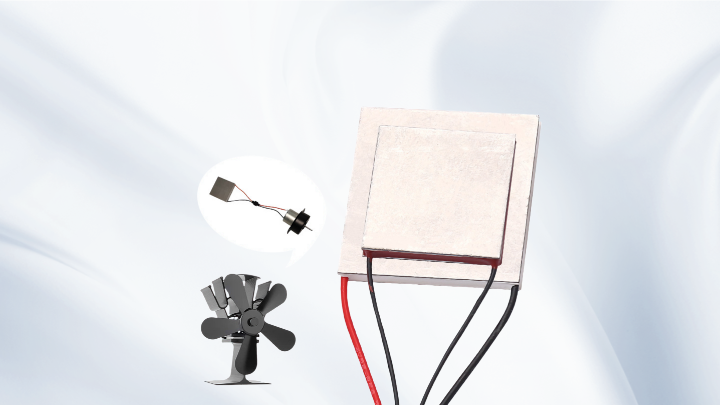
How to Select a Thermoelectric Cooler Product for Reliable Thermal Management
A Thermoelectric Cooler Product is often described by a few headline numbers, but a successful design depends on how the TEC module behaves inside the actual thermal system. A Peltier cooler does not create cooling by itself; it moves heat from a cold side to a hot side, where that heat must be removed. If the hot side cannot reject heat efficiently, the cold side temperature will rise and the expected cooling capacity will not be available. This is why selecting a Thermoelectric Cooler Product should begin with a clear understanding of heat load, temperature difference, ambient conditions, and the thermal path around the module.
What a Thermoelectric Cooler Product Must Do in a Real System
In a real assembly, the thermoelectric cooler works with a heatsink, fan, thermal interface material, insulation, mounting hardware, and a power supply. The module is the active component, but the system determines whether that module can maintain the target cold-side temperature. A Peltier module may perform well on a datasheet at a fixed hot-side temperature, yet underperform in an enclosure where warm air is trapped or the heatsink is undersized.
The practical goal is not simply to buy a module with a high Qmax. The goal is to create a thermal design in which the module can pump the required heat load at the required temperature difference while keeping the hot side within a safe operating range. That requires attention to cooling capacity, heat dissipation, thermal resistance, input voltage, input current, and installation quality.
For many applications, the most useful starting point is a simple energy balance: heat entering the cold side plus electrical power input becomes heat that must be rejected from the hot side. If any part of that path is weak, the entire thermoelectric cooling system suffers.
Begin with Heat Load and Temperature Difference, Not Qmax Alone
Qmax is the maximum heat pumping rate of a TEC module, normally defined at zero temperature difference between the cold side and hot side. ΔTmax is the maximum temperature difference a module can produce, normally defined at zero heat load. These two values are useful reference points, but they cannot be achieved at the same time under the same operating condition. In real operation, the module works somewhere between these limits, and its actual capacity depends on the heat load, hot-side temperature, cold-side temperature, input current, input voltage, and the surrounding thermal design.
Before comparing any Thermoelectric Cooler Product, list the actual heat load. Include active heat sources such as electronics, sensors, lasers, or samples, and passive gains such as radiation, conduction through walls, and heat leaking through insulation. Then define the target cold-side temperature, the expected ambient temperature, and the available space for the heatsink. These inputs are more important than a single Qmax number because they define the operating point the module must meet.
A module selected only by Qmax may be too large, too inefficient, or unable to handle the required temperature difference. A module selected only by ΔTmax may have too little cooling capacity for the heat load. The right choice is the module whose performance curve covers the required heat load and temperature difference with reasonable margin under the expected hot-side conditions.
How to Read a Thermoelectric Cooler Product Datasheet
A datasheet for a Thermoelectric Cooler Product usually includes Qmax, ΔTmax, Imax, Vmax, electrical resistance, dimensions, and performance curves. These values are measured under specific test conditions, so the hot-side temperature used for the rating matters. A module rated at one hot-side temperature may deliver different results when the ambient or heatsink temperature changes.
Imax and Vmax are maximum ratings, not automatic operating recommendations. Running a module at maximum current increases power consumption and hot-side heat rejection, which can reduce net cooling if the heatsink cannot remove the extra heat. In many designs, operating below Imax can improve efficiency and stability, although it also reduces cooling capacity. The optimum point depends on the application targets and the thermal resistance of the hot-side path.
Look for curves showing cooling capacity versus temperature difference at different currents and hot-side temperatures. If those curves are not available, ask the supplier for application support. KKG can help engineers interpret module data and compare TEC options for a specific thermal target without relying on headline numbers alone.
Heat Dissipation, Thermal Resistance, and Hot-Side Temperature
The hot side of a TEC module rejects both the heat pumped from the cold side and the electrical power consumed by the module. This means heat dissipation is always greater than the cold-side heat load. If the heatsink, thermal interface material, airflow, or mounting pressure is inadequate, the hot-side temperature rises. A higher hot-side temperature reduces the achievable temperature difference and can eventually cause thermal runaway or premature failure.
Thermal resistance from the module hot side to ambient is a critical design parameter. A low thermal resistance path keeps the hot side cooler, allowing the module to maintain a lower cold-side temperature. This path includes the module ceramic, thermal interface material, heatsink base, heatsink fins, and the air or liquid cooling medium. Each layer adds resistance, and poor contact at any interface can dominate the result.
In high-ambient environments, the hot-side challenge becomes even more important. A high-temperature TEC module may be needed for reliability, but it cannot compensate for an undersized heatsink. Similarly, a miniature TEC module can fit a compact enclosure, but the available heatsink area may limit cooling capacity. Thermal management must be designed as a system, not added after the module is chosen.
Matching Thermoelectric Cooler Product Types to Application Constraints
Different applications place different demands on a Thermoelectric Cooler Product. Single-stage TEC modules are common for general cooling tasks where the required temperature difference is moderate. Multi-stage TEC modules can achieve larger temperature differences, but they typically have lower efficiency and require careful heat rejection. Miniature TEC modules are useful when space is limited, while high-temperature TEC modules are intended for assemblies where the hot side or ambient conditions are warmer.
Custom TEC assemblies may be appropriate when the mechanical envelope, sealing, control strategy, or thermal interface requires adaptation. For enclosure cooling, the design must account for air circulation and condensation. For electronics thermal management, the heat load may vary with operating mode, so the TEC and control loop must handle both peak and steady-state conditions. For scientific or medical equipment, temperature stability may matter as much as raw cooling capacity.
For teams comparing options, KKG product categories can help narrow the search: standard single-stage TEC modules for many general cooling tasks, miniature TEC modules for compact assemblies, high-temperature TEC modules for warm ambient conditions, multi-stage modules for larger temperature differences, and custom TEC assemblies where the mechanical or control requirements demand adaptation.
Validation and Troubleshooting Before Final Design
Prototype testing should measure input voltage, input current, cold-side temperature, hot-side temperature, ambient temperature, and power consumption under realistic heat loads. These measurements show whether the selected module is operating near the intended point and whether the hot-side path is adequate. Condensation is another practical concern: if the cold side drops below the dew point, moisture control and sealing become part of the thermal design.
Common causes of poor performance include hot-side overheating, insufficient heatsink airflow, poor thermal contact, underestimated heat load, incorrect voltage or current, blocked ventilation, and heat leakage into the cold-side enclosure. If the cold side cannot reach the target temperature, diagnose the thermal path before changing the module. In many cases, improving the heatsink, interface material, or insulation delivers more benefit than selecting a larger TEC.
Validation should also include startup, steady-state, and fault conditions. A Thermoelectric Cooler Product that works briefly on a bench may behave differently in a closed enclosure or at elevated ambient temperature. The final design should include enough thermal margin for aging, dust, fan variation, and real-world operating conditions.
Frequently Asked Questions
Can a Thermoelectric Cooler Product reach Qmax and ΔTmax at the same time?No. Qmax is defined at zero temperature difference, while ΔTmax is defined at zero heat load. In real operation, the module works at an intermediate point determined by heat load, hot-side temperature, cold-side temperature, input power, and thermal resistance.
How do I choose between single-stage and multi-stage TEC modules?Use multi-stage modules when the application requires a larger temperature difference than a single-stage module can reasonably provide. However, multi-stage modules usually have lower efficiency and need better heat rejection, so the decision should be based on the required ΔT, heat load, power budget, and available space.
Why does my Peltier cooler underperform after assembly?The most common reasons are inadequate hot-side heat dissipation, poor thermal contact, insufficient airflow, heat leakage into the cold side, or operation outside the intended voltage and current range. Check the hot-side temperature and thermal resistance first.
Does a higher-current TEC always provide more cooling?Not necessarily. Higher current can increase heat pumping, but it also increases electrical power and hot-side heat rejection. If the heatsink cannot remove that heat, the hot side warms up and net cooling may decrease. The best operating point depends on the full thermal system.
What information should I prepare before selecting a Thermoelectric Cooler Product?Prepare the heat load, target cold-side temperature, expected ambient or hot-side temperature, available space, power supply limits, control requirements, condensation risk, and any mechanical constraints. These details allow a supplier to recommend a suitable TEC module and thermal design approach.
Conclusion
Choosing a Thermoelectric Cooler Product is an exercise in thermal system design, not just catalog comparison. Qmax and ΔTmax are useful reference values, but actual performance depends on heat load, hot-side temperature, cold-side temperature, voltage, current, thermal resistance, and heat dissipation. By defining the operating point first, reading datasheets carefully, and validating the hot-side thermal path, engineers can select a TEC module that delivers stable cooling in the real application.
META TITLE: How to Select a Thermoelectric Cooler Product | KKG
META DESCRIPTION: Learn how to select a Thermoelectric Cooler Product by evaluating heat load, Qmax, ΔTmax, voltage, current, hot-side temperature, and heat dissipation.
