





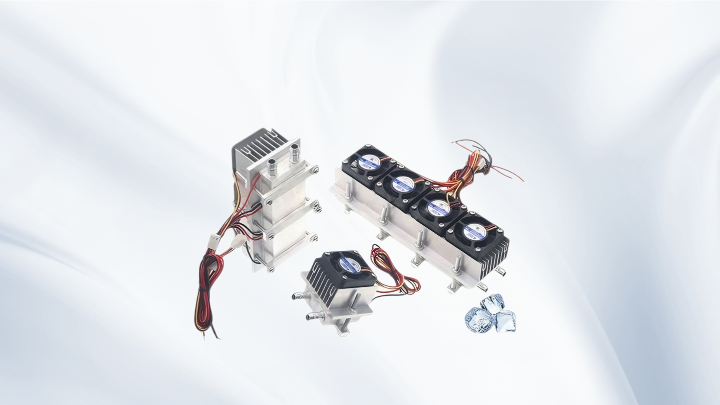
Industry-Leading TEC Cooler: The Ultimate Guide to Thermoelectric Coolingthermoelectric cooler
Understanding Thermoelectric Coolers (TECs)
Thermoelectric coolers, commonly known as TECs or Peltier devices, are solid-state heat pumps that transfer heat from one side of the device to the other when an electric current flows through it. Unlike traditional compressor-based refrigeration, TECs have no moving parts, making them highly reliable, compact, and environmentally friendly. The core principle is the Peltier effect, discovered in 1834 by Jean Charles Athanase Peltier, which describes how an electric current flowing through the junction of two different materials causes heat absorption or release.
In practice, a TEC consists of multiple pairs of p-type and n-type semiconductor elements, typically bismuth telluride, arranged electrically in series and thermally in parallel. When direct current is applied, electrons move from the p-type to the n-type material, carrying heat along with them. This causes one side (the cold side) to cool down while the opposite side (the hot side) heats up. The hot side must be effectively cooled using a heat sink or fan to maintain the temperature differential.
Why Choose an Industry-Leading TEC Cooler?
In the competitive landscape of thermal management, an industry-leading TEC cooler offers superior performance, reliability, and efficiency. These premium devices are designed with advanced materials and optimized geometries to maximize the coefficient of performance (COP) and temperature difference (ΔT). They are manufactured using strict quality control processes, ensuring consistent operation in demanding environments. Moreover, leading TECs feature low thermal cycling fatigue, precise temperature control, and long operational lifetimes, often exceeding 200,000 hours of continuous use.
One of the key advantages of top-tier TECs is their ability to achieve sub-ambient temperatures. With a single-stage TEC, a temperature difference of up to 70°C can be achieved, while multi-stage TECs can exceed 100°C. This makes them ideal for applications requiring extreme cooling, such as laser diodes, infrared detectors, and scientific instruments. Additionally, industry-leading TECs offer fast response times, allowing for rapid temperature stabilization within seconds.
Critical Applications of TEC Coolers
The versatility of TEC coolers has led to their widespread adoption across various industries. In the electronics sector, they are used to cool CPUs, GPUs, and high-power amplifiers, preventing overheating and ensuring optimal performance. TECs also play a crucial role in optoelectronics, where they stabilize the wavelength of laser diodes by precisely maintaining their temperature. In medical technology, TECs are found in PCR thermocyclers, drug delivery patches, and portable cold storage for vaccines, enabling life-saving treatments in remote areas.
Automotive applications include seat coolers, cabin climate control, and battery cooling for electric vehicles. The aerospace industry relies on TECs for satellite thermal management and avionics cooling. Additionally, TECs are used in consumer products like portable refrigerators, wine coolers, and dehumidifiers. With the growing demand for solid-state cooling solutions, industry-leading TECs are at the forefront of innovation.
Key Factors to Consider When Selecting a TEC Cooler
Choosing the right TEC cooler for your application is critical to achieving optimal performance. First, determine the required cooling capacity (Qc) in watts, which is the amount of heat to be absorbed from the target object. This depends on the heat load, the desired temperature difference, and the ambient temperature. Second, consider the maximum operating temperature (Tmax) and the maximum temperature difference (ΔTmax) of the TEC. For applications requiring high ΔT, a multi-stage TEC may be necessary.
Another important factor is the electrical compatibility. TECs operate at specific voltages and currents, so you need a power supply that matches these requirements. The coefficient of performance (COP) is also crucial, as it indicates the efficiency of the TEC. Higher COP means lower power consumption and less heat generated on the hot side. Finally, consider the physical dimensions and mounting options. Industry-leading TECs come in various sizes and footprints to fit different applications. Advanced TECs also offer options like built-in temperature sensors, which enable precise control loops.
Installation and Thermal Management Tips
Proper installation is vital for the performance and longevity of a TEC cooler. The hot side must be attached to an effective heat sink to dissipate the heat quickly. Use a high-quality thermal interface material (TIM), such as thermal paste or phase-change material, between the TEC and the heat sink to minimize thermal resistance. The cold side should also be in good contact with the object to be cooled, using a TIM if necessary. For high-power applications, consider using a liquid cooling system or a heat pipe to enhance heat removal.
Ensure that the TEC is mounted flat to avoid stress and potential cracking. The screws should be tightened evenly, but not overtightened, to maintain even pressure. Additionally, the power supply should be well-regulated to avoid voltage spikes that could degrade the TEC. It is also advisable to include a temperature controller to maintain the desired setpoint and prevent thermal runaway. Many industry-leading TEC modules come with built-in NTC thermistors or resistance temperature detectors (RTDs) to simplify control.
Common Myths and Misconceptions
There are several myths surrounding TEC coolers that often mislead potential users. One common misconception is that TECs are inefficient compared to compressor-based systems. While it is true that TECs have lower COP for large cooling loads, they are highly efficient for small to medium loads, especially when precise temperature control is required. Another myth is that TECs are fragile and prone to failure. In reality, high-quality TECs are robust and can operate reliably for many years if used within their specifications.
Some also believe that TECs can cool below ambient temperature without any external heat exchanger. This is false; the hot side must be adequately cooled to achieve low temperatures on the cold side. Additionally, there is a misunderstanding that TECs generate cold by themselves. In fact, they only transfer heat, so the temperature difference is limited by the amount of heat removed. By understanding these aspects, you can effectively utilize TEC technology to its full potential.
Future Trends in TEC Technology
The TEC industry is continually evolving, with research focusing on improving material efficiency and reducing costs. One exciting development is the use of thin-film technology, which enables miniaturized TECs with response times in milliseconds. Another trend is the integration of TECs with IoT and smart control systems, allowing for remote monitoring and adaptive cooling. Additionally, there is growing interest in using waste heat recovery to power TECs, creating self-sustaining cooling systems.
Companies are also exploring new thermoelectric materials, such as skutterudites and half-Heusler alloys, which offer higher ZT values (a measure of thermoelectric efficiency). These materials will push the boundaries of TEC performance, enabling more applications in fields like renewable energy and wearable devices. Staying updated with these trends is essential for engineers and designers.
常见问题
What are the main advantages of an industry-leading TEC cooler?Industry-leading TEC coolers offer exceptional reliability, precise temperature control, and compact size. They have no moving parts, which reduces maintenance and eliminates noise. Their fast response times and ability to achieve sub-ambient temperatures make them ideal for demanding applications like laser cooling and medical diagnostics.
How do I choose the right TEC cooler for my project?Start by calculating the required cooling capacity (Qc) based on your heat load and desired temperature difference. Then consider the maximum operating temperature, ΔTmax, and COP. Ensure that your power supply matches the voltage and current requirements. Also, consider physical dimensions and whether you need a multi-stage or single-stage device.
Can a TEC cooler be used to heat as well as cool?Yes, TECs are bidirectional. By reversing the polarity of the current, the direction of heat flow reverses, turning the device into a heater. This feature is utilized in applications like seat heaters and temperature cyclers, where both heating and cooling are required.
What is the typical lifespan of a TEC cooler?Industry-leading TECs can last over 200,000 hours (about 23 years) when operated under proper conditions. Factors that affect lifespan include operating temperature, thermal cycling, and electrical stress. Following the manufacturer's guidelines ensures maximum durability.
Are there any environmental concerns with using TEC coolers?TECs are environmentally friendly as they use no refrigerants, which are potent greenhouse gases. They are also energy-efficient for small cooling loads. However, they do require electricity, and the overall energy consumption depends on the application and control strategy.
