





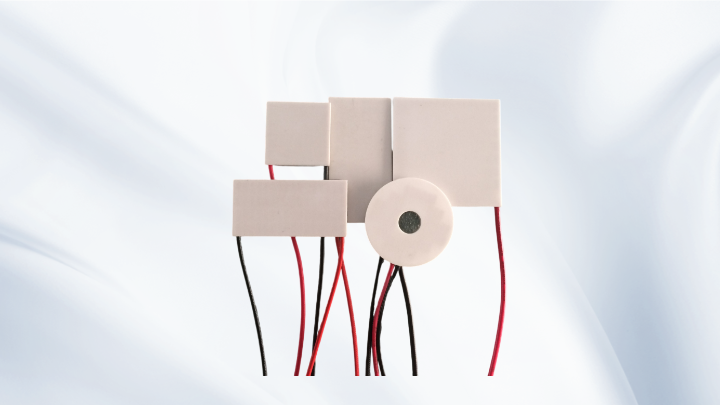
How to Choose a Thermoelectric Cooler: TEC Selection Guide
How to Choose a Thermoelectric Cooler: TEC Selection Guide
When precision temperature control is critical to your application, choosing a high-performance cooling solution makes all the difference. A premium thermoelectric cooler (TEC) offers reliable solid-state temperature management for demanding environments, from photonics and medical diagnostics to automotive electronics and aerospace systems. Unlike traditional compressor-based refrigeration, a thermoelectric cooler operates without moving parts, enabling compact, maintenance-free, and precisely controllable cooling.
What Is a Premium Thermoelectric Cooler?
A premium thermoelectric cooler, also known as a Peltier cooler or TEC module, is a semiconductor-based heat pump that transfers heat from one side of the device to the other when an electric current flows. This phenomenon, called the Peltier effect, occurs at the junction of two different conductive materials. In a TEC module, dozens or even hundreds of p-type and n-type bismuth telluride pellets are connected electrically in series and thermally in parallel. They are sandwiched between two ceramic substrates, typically alumina or aluminum nitride, which provide electrical insulation and mechanical support.
When DC power is applied, one side of the module becomes cold (the cold side) while the opposite side becomes hot (the hot side). The heat absorbed on the cold side is pumped to the hot side, where it must be removed by a heatsink, fan, or liquid cooling system. A premium TEC is characterized by higher cooling density, better temperature uniformity, and longer reliability compared to lower-grade modules. These performance benefits come from advanced manufacturing processes, superior thermoelectric materials, and rigorous quality control—making them ideal for applications that demand precise thermal management.
Key Performance Parameters: Qmax, ΔTmax, Imax, Vmax
Understanding the specifications of a premium thermoelectric cooler is essential for proper selection. Four interrelated parameters define the performance envelope of a TEC:
Qmax (maximum cooling capacity) is the maximum heat load a TEC module can absorb at zero temperature difference between its hot and cold sides. It is measured in watts (W) and represents the maximum thermal power the module can pump. Qmax is achieved when the hot side is maintained at a specified reference temperature (usually 27°C or 50°C) and the TEC operates at its rated current and voltage.
ΔTmax (maximum temperature difference) is the maximum temperature differential the TEC can sustain between its hot side and cold side when no heat load is applied (Qc = 0). ΔTmax is also measured under the same reference hot-side temperature and at the rated current and voltage.
Imax and Vmax are the current and voltage that produce Qmax and ΔTmax. They are fundamental ratings, but they are not applied simultaneously in normal operation. In fact, a TEC can achieve either its maximum cooling capacity at close to zero ΔT, or its maximum temperature difference with zero heat load—but not both at once. The actual operating point lies somewhere inside the performance curve determined by the heat load, the hot-side temperature, and the applied current.
When selecting a premium thermoelectric cooler, you must balance cooling capacity (Qc) and temperature difference (ΔT) based on your application. For example, if you need a 5°C cold-side temperature while dissipating a 20-W heat load, the TEC must be capable of pumping that 20 W at the required ΔT, which is often less than ΔTmax. A premium TEC datasheet provides performance curves that show how Qc varies with ΔT at different currents. Using these curves, engineers can select a module that operates efficiently at the desired point.
How to Select a Premium Thermoelectric Cooler
Selecting the right TEC module is a systematic process that requires a clear understanding of the thermal environment. Below is a step-by-step approach used by experienced thermal engineers.
Step 1: Determine the Heat Load and Target Temperatures
First, quantify the active heat load that the TEC must remove. This includes the device’s own power dissipation, any external heat input, and transient thermal loads. Then define the required cold-side temperature (Tc) and the expected hot-side temperature (Th). Remember that Th is not the ambient temperature; it is the temperature of the TEC's hot-side ceramic substrate, which depends on the heatsink and airflow. If you estimate Th from your heatsink’s thermal resistance, you can calculate the required ΔT = Th − Tc.
Step 2: Estimate the Required Cooling Capacity (Qc)
The total heat the TEC must handle includes both the active heat load and any heat leaking from the hot side back to the cold side. This parasitic heat is influenced by the insulation and the physical layout of the assembly. A common rule of thumb is to add 20–30% – or up to 100% for high-ΔT applications – to the nominal heat load to account for heat leakage and safety margin. The resulting Qc becomes your design requirement.
Step 3: Review the Performance Curves and Select a Candidate TEC
Using the manufacturer’s performance curves, find a module that can pump the required Qc at the required ΔT while running at an efficient operating current. A well-designed Peltier cooler operates at 50–70% of Imax for a balance of cooling capacity and coefficient of performance (COP). Note the voltage and current at that operating point, and ensure your power supply can deliver them continuously. Also verify that the module’s dimensions fit your mechanical envelope.
Step 4: Check the Maximum Temperature Difference and CoP
Ensure that the required ΔT is less than the module’s ΔTmax under your exact hot-side temperature. If the calculated ΔT exceeds ΔTmax, you may need a multistage TEC or an alternative cooling approach. Also, evaluate the coefficient of performance: a higher COP reduces power consumption and heat dumped on the hot side, simplifying heatsink design.
Step 5: Verify Mechanical and Environmental Requirements
Consider the mechanical size, mounting method, and environmental conditions. A premium thermoelectric cooler with a higher maximum operating temperature may be necessary for automotive or industrial settings. If the cold side will be exposed to humid air, consider a sealed module or a condensation-resistant coating. For extreme temperature swings, a lightweight miniature TEC might be the best fit.
Thermal Management: Hot-Side Dissipation and Heatsink Design
The performance of any thermoelectric cooler is only as good as its hot-side heat rejection. A TEC pumps heat to the hot side, but that heat must be continuously removed or the hot-side temperature rises, which directly reduces the temperature difference and cooling capacity. The thermal resistance (Rth) of the heatsink and the thermal interface material (TIM) between the TEC and the heatsink are critical factors.
For a premium TEC, a high-performance heatsink with forced airflow or liquid cooling is often required. The heat load on the hot side is the sum of the heat pumped from the cold side (Qc) and the electrical power consumed by the TEC (Pin = I × V). This total heat must be dissipated through the heatsink. Therefore, the heatsink thermal resistance should be low enough to maintain a reasonable Th. In portable devices, space constraints may call for a miniature heat pipe assembly; in stationary equipment, a finned aluminum heatsink with a fan is typical.
The thermal interface material also matters. A thin layer of phase-change material, graphite sheet, or high-thermal-conductivity grease reduces contact resistance. Mounting pressure must be uniform across the TEC's surfaces to avoid micro-cracks in the ceramic substrate. Always follow the manufacturer’s recommended mounting guidelines. Using a torque wrench and a flat lapped surface ensures good contact and consistent performance.
Common Applications and Practical Considerations
Premium thermoelectric coolers are used across many industries because they provide precise, dynamic temperature control. Some typical applications include:
- Laser diode coolers in optical transceivers and photonics modules, where wavelength stability depends on a fixed temperature.
- Medical diagnostic instruments, such as PCR thermal cyclers and laboratory refrigerators, which require rapid temperature cycling and uniform cooling.
- Automotive seat climate control and battery thermal management, where low-profile, robust TECs operate in harsh environments.
- Portable food and beverage coolers, which benefit from the small size and low weight of a thermoelectric system.
When integrating a Peltier module, pay attention to power supply quality. High-current ripple can cause temperature fluctuations and reduce the effective ΔT. Use a regulated DC power supply with low ripple, and consider adding an LC filter if needed. Also, protect the TEC from overvoltage and overcurrent conditions; a premium module is often sensitive to electrical stress. Use a thermistor or RTD in a feedback loop to achieve stable closed-loop temperature control.
Condensation is another important consideration. When the cold side operates below the dew point, moisture can form and cause corrosion or electrical shorts. In such cases, sealing the TEC cold side with conformal coating or using a dry-nitrogen enclosure is recommended. For high-temperature applications, such as hot-plate cycling, select a TEC with high-temperature solder and ceramic materials that can withstand repeated thermal stress.
Frequently Asked Questions
Q1: What is the difference between Qmax and ΔTmax in a thermoelectric cooler?
Qmax is the maximum cooling power a TEC can pump when there is no temperature difference between its hot and cold sides. ΔTmax is the maximum temperature difference it can create when no heat load is applied. They are two extreme operating points and cannot be achieved simultaneously. The actual operating point is determined by the heat load and the hot-side temperature.
Q2: How do I choose between a single-stage and a multi-stage Peltier module?
If your required ΔT is greater than approximately 50–60°C at the specified hot-side temperature, a standard single-stage TEC may not be sufficient. Multi-stage TEC modules stack several Peltier stages to achieve a larger temperature difference, although with lower cooling capacity efficiency. Use the application’s ΔT and Qc requirements, along with the available space, to decide.
Q3: Can a premium thermoelectric cooler operate in reverse to generate electricity?
Yes, a TEC module can act as a thermoelectric generator (TEG) when a temperature difference is applied across it. However, the efficiency is generally lower than dedicated thermoelectric generators. For most cooling applications, the TEC is optimized for pumping heat, not generating power, so reverse operation is not a standard use case.
Q4: How important is the hot-side heatsink for a thermoelectric cooler?
It is absolutely essential. A TEC cannot operate effectively without adequate heat dissipation on the hot side. If the hot-side temperature rises, the temperature difference (ΔT) the TEC can achieve drops dramatically. Always size the heatsink and fan to handle the total heat load—the sum of the heat absorbed on the cold side and the TEC’s electrical input power—and keep the hot-side temperature as low as practically possible.
Conclusion
Selecting a premium thermoelectric cooler is not simply about picking the biggest module you can fit; it is about matching the TEC's performance envelope to your heat load, target temperatures, and thermal environment. The design engineer must understand Qmax, ΔTmax, Imax, and Vmax, and know that these values represent extreme conditions that rarely coexist in real operation. Effective hot-side heat dissipation, proper thermal interface materials, and careful attention to power supply quality are equally critical to achieving reliable, precise temperature control.
By following the selection process and thermal management principles outlined above, you can confidently integrate a premium thermoelectric cooler into your product. Whether you need a miniature TEC for a portable device, a multistage module for deep temperature differences, or a custom high-temperature TEC for industrial processing, working with experienced thermoelectric cooler manufacturers like KKG ensures that your thermal management system is optimized for performance, efficiency, and long-term reliability.
Meta Title: Premium Thermoelectric Cooler Selection Guide | KKG TEC
Meta Description: Learn how to select and apply a premium thermoelectric cooler. Understand Qmax, ΔTmax, hot-side dissipation, and thermal management for reliable TEC performance.
