





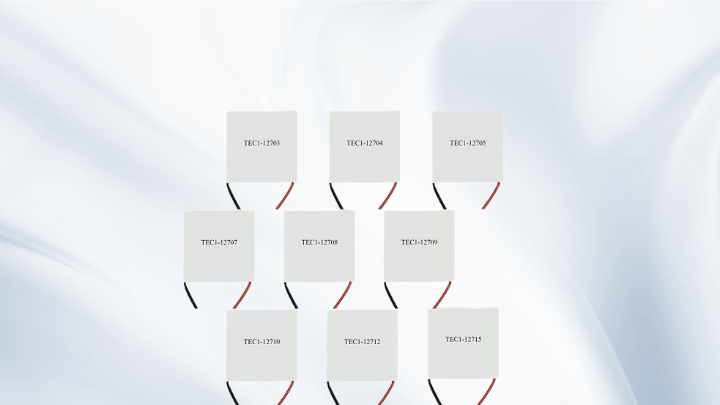
The Ultimate Guide to TEC Coolers: How Thermoelectric Cooling Works and Why You Need Onethermoelectric cooler
What is a TEC Cooler?
A TEC cooler, or thermoelectric cooler, is a solid-state device that uses the Peltier effect to transfer heat from one side of the device to the other. When an electric current passes through two dissimilar semiconductors, heat is absorbed on the cold side and released on the hot side. This allows for precise cooling without moving parts, making TEC coolers highly reliable and maintenance-free.
How Does a TEC Cooler Work?
At the core of a TEC cooler are multiple Peltier modules connected electrically in series and thermally in parallel. Each module consists of p-type and n-type semiconductor blocks sandwiched between ceramic plates. When DC power is applied, electrons move from the p-type to the n-type material, carrying heat energy. This creates a temperature difference: the cold side can drop below ambient temperature while the hot side rises. To maintain cooling, a heatsink and fan are typically required to dissipate heat from the hot side.
Key Advantages of TEC Coolers
Unlike traditional compressor-based coolers, TEC coolers offer several unique benefits: they are compact, silent, vibration-free, and environmentally friendly (no refrigerants). They can also achieve precise temperature control within 0.1°C, making them ideal for scientific equipment, laser diodes, and CPU cooling. Additionally, they have a long lifespan since there are no moving parts to wear out.
Common Applications
TEC coolers are used in a wide range of fields: portable coolers for camping, electronic component cooling in computers, PCR cyclers in laboratories, night vision equipment, and even beverage coolers. In automotive, they're found in heated/cooled seats. Their ability to both heat and cool (by reversing polarity) makes them versatile for temperature regulation.
How to Choose the Right TEC Cooler
When selecting a TEC cooler, consider: cooling capacity (Qmax), maximum temperature difference (ΔTmax), operating voltage and current, and physical size. For maximum efficiency, match the module's Qmax to your heat load. Also, ensure adequate heat sinking: a poor heatsink can dramatically reduce performance. For high-power applications, using multiple modules in parallel or a larger module is recommended.
Installation Tips
Always apply thermal paste between the module and both the heatsink and cold object. Tighten evenly to avoid cracking the ceramic plates. Use a regulated power supply to avoid voltage spikes. For cooling, ensure the hot side gets sufficient airflow. If you need to cool below ambient, consider a multistage or cascade setup.
Common Mistakes to Avoid
One of the most common errors is undersizing the heatsink. Without proper heat dissipation, the temperature difference collapses. Another mistake is running the module at max voltage without considering the heat load. Always check the module's performance curves. Finally, avoid condensation: when cooling below dew point, you must insulate the cold side to prevent moisture damage.
Frequently Asked Questions
Can a TEC cooler replace a refrigerator?While TEC coolers can draw temperatures below ambient, they are less efficient than compressor-based refrigerators for large-scale cooling. They are best suited for small, portable applications where silence and compactness are priorities.
How long do TEC coolers last?Properly used, TEC coolers can last over 10 years. However, thermal cycling (frequent on-off) and excessive temperature differences can shorten lifespan. Ensure good thermal management to maximize longevity.
Can I use a TEC cooler for cooling water?Yes, with a cold plate or water block. For example, DIY water coolers for PCs use TEC modules with water blocks. However, ensure the hot side is efficiently cooled, and avoid freezing the water as ice can crack the module.
