


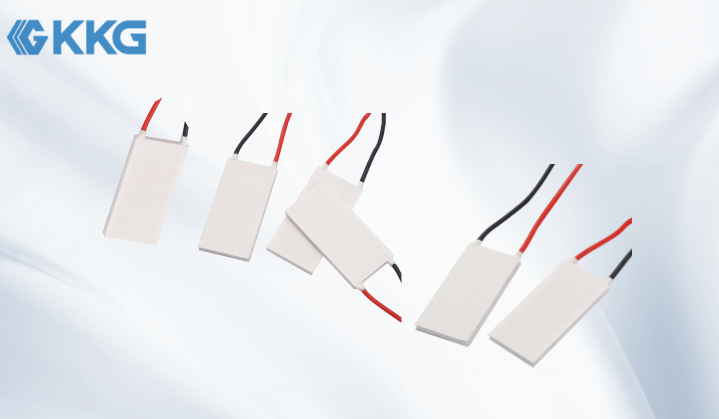
Thermoelectric Cooler Ranking List: A Practical TEC Selection Guide
What a Thermoelectric Cooler Ranking List Should Really Tell You
A Thermoelectric Cooler Ranking List is most valuable when it is treated as an engineering comparison framework, not as a simple product promotion table. For a thermoelectric cooler, the useful comparison points are the TEC module electrical limits, cooling capacity, temperature difference capability, mechanical size, and the thermal conditions under which those values are defined. A Peltier cooler can look strong on one line of a list and still be a poor fit if the hot side cannot reject heat or if the required operating point is far from the listed maximums. The first step is therefore to define the actual heat load, target cold-side temperature, available hot-side temperature, ambient conditions, and power budget. Only then can a Thermoelectric Cooler Ranking List help narrow the choice of a Peltier module for a real thermal management task.
Define the Thermal Duty Before Comparing TEC Modules
Before using a Thermoelectric Cooler Ranking List, write down the thermal duty in plain engineering terms. What is being cooled? Is the load continuous or pulsed? What is the heat load in watts at the target condition? What cold-side temperature is required, and what hot-side temperature can the heatsink realistically maintain? These questions matter because thermoelectric cooling performance is not a single number. The same TEC module can deliver very different cooling capacity when the temperature difference changes.
Use the list to compare modules only after the load is defined. A module with high Qmax may be unsuitable if the available voltage and current are limited. A module with high ΔTmax may not be the most efficient choice if the system only needs a modest temperature difference. A miniature TEC may fit a compact optical package, but it may not remove a large heat load. A multi-stage TEC may reach a larger temperature difference, but it usually requires more careful heat dissipation and power management. The Thermoelectric Cooler Ranking List should support these decisions, not replace them.
Read Qmax, ΔTmax, Imax, and Vmax Correctly
The most common source of confusion in a Thermoelectric Cooler Ranking List is the relationship between Qmax and ΔTmax. Qmax is the maximum heat-pumping capacity, normally defined at a temperature difference of zero. ΔTmax is the maximum temperature difference, normally defined at zero heat load. These are boundary values, not simultaneous operating points. In a real application, the TEC operates somewhere between them. As the temperature difference across the module increases, the cooling capacity decreases. As the heat load increases, the achievable temperature difference decreases.
Imax and Vmax are also reference values tied to specified conditions. They should not be read as normal operating setpoints for every system. The actual input voltage and current determine power consumption, heat rejection, and control behavior. Electrical resistance affects voltage drop and Joule heating inside the module. For a Peltier cooler design, the practical question is not simply which module has the highest Qmax or ΔTmax. It is which module delivers the required cooling capacity at the required temperature difference while staying within the electrical and thermal limits of the system.
Match Voltage, Current, and Power Consumption to the System
A Thermoelectric Cooler Ranking List is only useful when electrical parameters are read with the rest of the system in mind. A TEC module may be listed with a certain Vmax and Imax, but the available power supply, controller, wiring, and safety margins may not support operation near those limits. In many designs, the module is operated below the maximum ratings to improve stability, reduce stress, and manage power consumption.
Check the input voltage and current requirements against the actual driver. Consider startup behavior, PWM control, current ripple, and the effect of ambient temperature on electronics. Calculate the approximate electrical power input, then remember that the TEC rejects both the pumped heat load and the electrical power as heat at the hot side. This hot-side heat load is often larger than the cold-side load. If the Thermoelectric Cooler Ranking List does not account for this, the selected module may appear adequate on paper but fail in the enclosure. Power consumption also affects battery life, thermal cycling, and the size of the heatsink and fan.
Heat Dissipation and Hot-Side Temperature Drive Real Performance
No Thermoelectric Cooler Ranking List can compensate for poor heat dissipation. The hot side of a thermoelectric cooler must reject heat to the ambient through a heatsink, thermal interface material, and mechanical stack. If the hot-side temperature rises, the temperature difference across the module increases for the same cold-side target, and cooling capacity falls. Thermal resistance from the TEC hot side to ambient is therefore a critical design parameter.
When comparing Peltier modules, look at the assumed hot-side temperature and heatsink condition behind any performance figure. A module that performs well with an efficient heatsink and forced airflow may not perform with a small natural-convection heatsink. Use suitable thermal interface material, control mounting pressure, avoid uneven clamping, and account for insulation and air gaps. In a semiconductor cooling system, the cold side, hot side, heat load, and heat dissipation path must be designed together. The Thermoelectric Cooler Ranking List can guide module shortlisting, but the thermal management design determines whether the final system reaches the target temperature.
Application Scenarios for a Thermoelectric Cooler Ranking List
Different applications place different demands on a Peltier module. For miniature enclosures, optical sensors, or laser components, a small TEC may be preferred, but the heat load and available space must be checked carefully. For high-temperature environments, the hot-side temperature may limit the allowable temperature difference and require a module designed for reliable operation under those conditions. For multi-stage TEC assemblies, each stage must be thermally and electrically matched to the next; a simple list of maximum values is not enough.
Custom TEC designs are common when standard modules do not match the mechanical envelope, electrical supply, or thermal duty. In these cases, a Thermoelectric Cooler Ranking List should be used as a starting point for discussing size, Qmax, ΔTmax, voltage, current, and mounting requirements with the manufacturer. KKG's TEC product categories, including miniature TEC, high-temperature TEC, multi-stage TEC, and custom TEC options, can support this selection process when the application requirements are clearly defined. The goal is not to choose the most aggressive number on the list, but to choose the module that operates efficiently and reliably at the actual working point.
Common Errors When Using a Thermoelectric Cooler Ranking List
One common error is assuming that Qmax can be achieved while also reaching ΔTmax. In practice, the module cannot normally deliver both at the same time. Another error is comparing modules at different hot-side temperatures or with different heatsink assumptions. A third is ignoring the additional heat rejection caused by power consumption. These mistakes can lead to oversized drivers, undersized heatsinks, excessive temperature difference, and unstable control.
A practical review should include the heat load at the target cold-side temperature, the expected hot-side temperature, the thermal resistance of the heatsink, the input voltage and current, and the allowable power consumption. If any of these values are unknown, the Thermoelectric Cooler Ranking List should be treated as preliminary. Build a thermal model or run a controlled test before committing to a design. This approach is more reliable than selecting a module solely because it has high numbers in a table.
Frequently Asked Questions
What does Qmax mean in a Thermoelectric Cooler Ranking List?
Qmax is the maximum cooling capacity of a TEC module, usually specified at zero temperature difference between the cold side and hot side. It is a reference limit, not the cooling capacity at every operating point. Real cooling capacity is lower when the module must maintain a temperature difference or when the heat load changes.
Can a TEC module reach Qmax and ΔTmax at the same time?
No. Qmax and ΔTmax are boundary values defined under different conditions. Qmax is associated with zero temperature difference, while ΔTmax is associated with zero heat load. A real thermoelectric cooler operates between these limits, depending on heat load, hot-side temperature, input power, and heatsink performance.
Why does my Peltier cooler perform worse than the list suggests?
The most likely reasons are insufficient hot-side heat dissipation, a higher-than-assumed ambient temperature, poor thermal interface contact, or operation away from the conditions used in the list. Check the heatsink, airflow, mounting pressure, and actual voltage and current before changing the module.
Should I choose a higher Qmax or a higher ΔTmax module?
Choose based on the required operating point. If the system needs to remove a larger heat load at a modest temperature difference, Qmax and heat dissipation are important. If the system needs a larger temperature difference at a small load, ΔTmax and thermal isolation become more important. The right choice depends on the complete thermal design.
How can I use a Thermoelectric Cooler Ranking List for a custom TEC?
Use the list to define the required cooling capacity, temperature difference, voltage, current, size, and mounting constraints. Then discuss those requirements with a TEC manufacturer. A custom Peltier module can be matched to the enclosure and power supply, but the design still depends on real heat load and heat dissipation data.
Conclusion
A Thermoelectric Cooler Ranking List is a useful starting point for TEC selection, but it is not a substitute for thermal engineering. Read Qmax, ΔTmax, Imax, Vmax, voltage, current, and power consumption as reference values, then evaluate the module at the actual heat load, hot-side temperature, cold-side temperature, and heatsink condition. Pay close attention to heat dissipation, thermal resistance, and thermal interface material, because these factors determine whether a Peltier cooler can maintain the required temperature difference. By treating the Thermoelectric Cooler Ranking List as a structured comparison tool and designing the complete thermal management system around the real operating point, engineers can select or specify a TEC solution that is practical, stable, and suited to the application.
META TITLE: Thermoelectric Cooler Ranking List: Practical TEC Selection Guide
META DESCRIPTION: Learn how to use a Thermoelectric Cooler Ranking List for TEC selection, including Qmax, ΔTmax, voltage, current, heat load, and heat dissipation.
