





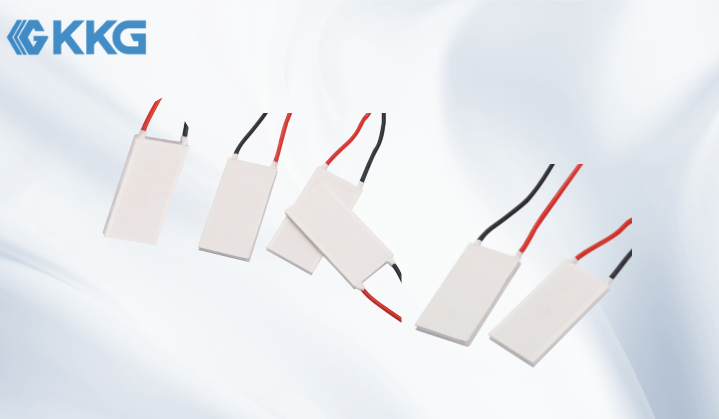
Thermoelectric Cooler Ranking List: How Engineers Evaluate and Select TEC Modules
Thermoelectric Cooler Ranking List: How Engineers Evaluate and Select TEC Modules
Searching for a thermoelectric cooler ranking list usually means one thing: you have a cooling problem, and you need to know which class of Peltier module actually fits it. Rankings built on marketing claims rarely survive contact with a real thermal budget. A useful ranking list is built from measurable parameters — Qmax, ΔTmax, Imax, Vmax, footprint, stage count and derating behavior — combined with the operating conditions of your application. This article explains how engineers compare TEC modules, how to build a ranking framework for your own design, and where most selection mistakes originate.
What a Thermoelectric Cooler Ranking List Should Actually Compare
A ranking list is only meaningful if every module is measured the same way. Almost all TEC datasheets quote performance at a hot-side temperature of 27 °C, with the module mounted on a reference heatsink in a defined ambient. That reference condition is useful for comparing modules against each other, but it says little about behavior inside a sealed enclosure where the hot side sits at 55 °C or higher.
The first filter, therefore, is normalization. A list that mixes modules specified at 27 °C with modules specified at 50 °C is not comparing cooling capability — it is comparing test conditions. Before any module enters your shortlist, re-derive its cooling capacity at your expected hot-side and cold-side temperatures using the datasheet performance curves or a standard TEC model.
Normalize for Size and Input Power
Raw watts of cooling are not a fair comparison between a 62 mm module and a 15 mm module. Two normalizations help:
Cooling per unit area shows which ceramic footprint is being used efficiently, which matters in miniature or multi-module arrays where board space and height are constrained.
Coefficient of performance (COP), defined as Qc divided by input power, shows how much electricity each module consumes to move a watt of heat. Two modules with the same Qmax can differ substantially in power consumption, which changes both the operating cost and the amount of heat the heatsink must reject.
The Parameters Behind Every Thermoelectric Cooler Ranking List
Four values appear on essentially every TEC datasheet, and each one describes a different limit of the same device.
Qmax is the maximum heat the module can pump when the temperature difference across it is zero, driven at Imax and held at a defined hot-side temperature. It is a ceiling, not an operating capacity.
ΔTmax is the largest temperature difference the module can create between its cold side and hot side when it is pumping no heat load at all (Qc = 0), also at Imax. It defines how much temperature lift the material and geometry can produce.
Imax is the current at which both Qmax and ΔTmax occur for that module. Vmax is the corresponding DC voltage at Imax and ΔTmax. Together they set the electrical envelope your driver must satisfy.
Two further parameters matter for system-level ranking. The module electrical resistance determines Joule heating inside the pellets, and the module thermal conductance determines how much heat leaks back from the hot side to the cold side. Both degrade real performance relative to ideal expectations.
Why Qmax and ΔTmax Are Never Achieved at the Same Time
A common selection error is treating Qmax as available cooling capacity while also expecting ΔTmax. In practice, cooling capacity falls as the temperature difference rises. At ΔT = 0 you get Qmax. At ΔT = ΔTmax you get zero cooling. Every real operating point sits somewhere on the line between those two extremes, and its exact position is set by the heat load, the hot side temperature, and the heatsink performance.
This is why a ranking list that lists only Qmax is close to useless for selection. What you need is the module cooling curve at your actual hot-side temperature, and then you read off the Qc available at the ΔT your application requires.
Building Your Own Ranking List in Four Steps
Step 1: Quantify the Heat Load
Add up every heat path into the cold side: the active load (electronics, sensors, a fluid stream, a laser diode), passive gains through insulation and mounting hardware, and any transient pull-down requirement. Add a safety margin — typically 20 to 30 percent — because passive gains are easy to underestimate. A load that is measured only in steady state will often fail during cool-down.
Step 2: Fix the Hot-Side Temperature
The hot side is not ambient. It is ambient plus the rise across the heatsink and the thermal interfaces. That rise equals total rejected heat multiplied by heatsink thermal resistance, and the rejected heat is the cold-side load plus the module input power. Because input power depends on the module you have not chosen yet, this calculation is iterative — two or three passes usually converge.
Step 3: Define the Required ΔT and Read the Curve
With cold-side target and realistic hot-side temperature known, the required temperature difference is fixed. Candidates are then filtered by the question: does this module deliver the heat load at that ΔT and that hot-side temperature? Modules that cannot are removed from the list regardless of their headline Qmax.
Step 4: Rank by Efficiency, Voltage and Current Fit
What remains is ranked by COP at the operating point, by how comfortably Imax and Vmax fit the available power supply and driver, and by mechanical constraints such as height, footprint, sealing and mounting method. This is the stage where a technically sound ranking list diverges from a marketing one.
How the Criteria Shift by Application
Miniature TEC modules are used in optical modules, sensor stabilization and handheld analyzers, where footprint, height and low current draw outweigh raw capacity. Here classification usually comes down to package size and ceramic thickness rather than Qmax.
Multi-stage TEC modules are considered when a single stage cannot reach the required temperature difference at the available hot-side temperature. Each added stage increases achievable ΔT but reduces COP, so the ranking criterion becomes achievable lift per watt rather than capacity alone.
High-temperature TEC modules are specified where the hot side sits well above typical ambient — industrial enclosures, automotive-adjacent electronics, and instrumentation near heat sources. Solder selection and maximum hot-side rating become the limiting factors, and derating behavior dominates the comparison.
Custom TEC assemblies are appropriate when no standard footprint, height or sealing option fits. The ranking question then becomes whether a custom geometry improves the thermal path enough to justify tooling and lead time.
Common Mistakes That Distort a Thermoelectric Cooler Ranking List
Treating Qmax as usable capacity. It is only valid at zero temperature difference, which almost no application operates at.
Ignoring the hot side. A five-degree error in assumed hot-side temperature can shift available cooling capacity by a noticeable margin and change which module ranks first.
Undersizing the heatsink. The heatsink rejects the load plus the module input power. If its thermal resistance is too high, the hot side climbs, ΔT collapses, and the module appears defective when the real problem is heat dissipation.
Overlooking interface materials and mounting. Thermal interface material quality, flatness, and clamping pressure all add thermal resistance in series with the module. These resistances consume temperature difference that the TEC must then produce.
Comparing power consumption last. In battery-powered or densely packed systems, COP is often the deciding factor, not peak capacity.
Frequently Asked Questions
Can a TEC reach Qmax and ΔTmax at the same time?
No. Qmax occurs at zero temperature difference, and ΔTmax occurs at zero heat load. Any real operating point lies between them, determined by the heat load and the hot-side temperature. Selection must always be based on the cooling curve at your actual conditions.
Why does my Peltier cooler perform worse than the datasheet suggests?
The most common causes are a hot side that is warmer than assumed, an undersized heatsink, poor thermal interface contact, or a heat load larger than estimated. Datasheet values are referenced to a controlled hot-side temperature, and deviations in any of these areas reduce available cooling capacity.
How do I fairly compare TEC modules with different footprints?
Normalize. Compare cooling capacity per unit area, COP at the intended operating point, and the voltage and current required to reach it. A smaller module with better efficiency can outperform a larger one once heatsink and power supply constraints are included.
Do more stages always mean colder performance?
More stages increase the achievable temperature difference, which allows a colder cold side for a given hot side. However, each stage adds input power and reduces COP, and the rejected heat grows. Multi-stage designs are chosen when the required ΔT cannot be reached with a single stage at realistic hot-side temperatures.
What information is needed to specify a custom TEC?
Typical inputs include the heat load, target cold-side temperature, expected hot-side temperature, available voltage and current, allowable footprint and height, mounting method, and environmental conditions. With these, an engineer can define pellet geometry, stage count and ceramic configuration rather than guess from a catalog.
Conclusion
A thermoelectric cooler ranking list is most valuable when it is treated as an engineering filter rather than a shopping list. The parameters that decide success — Qmax, ΔTmax, Imax, Vmax, thermal resistance and COP — only become meaningful once the heat load, hot-side temperature and required temperature difference are known. Building the list in that order removes modules that cannot work before cost or lead time enters the discussion.
Because actual performance depends on heat load, hot-side temperature, input voltage and current, heatsink quality, interface materials and installation, the final selection should always be validated against a realistic thermal model, not a headline number. Whether the application calls for a miniature module, a multi-stage stack, a high-temperature design or a fully custom assembly, the right approach is the same: define the thermal budget first, then rank candidates against it.
Meta Information
META TITLE: Thermoelectric Cooler Ranking List: TEC Selection Guide
META DESCRIPTION: Learn how engineers build a thermoelectric cooler ranking list using Qmax, ΔTmax, Imax, Vmax and real operating conditions, plus practical TEC selection steps.
