





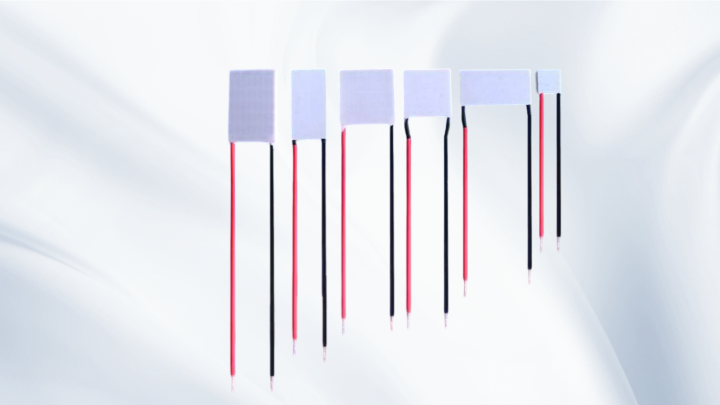
Thermoelectric Cooler Recommendation List: A Practical TEC Selection Guide
A thermoelectric cooler recommendation list is not a ranking of modules copied from a catalog. It is a shortlist of Peltier coolers that can actually satisfy a defined heat load, a required temperature difference, and a realistic power and space budget. Because every TEC application is bounded by its hot-side conditions and its heatsink, the same module can look excellent in one design and completely inadequate in another. This guide walks through the engineering process that experienced designers use to narrow dozens of candidate TEC modules down to two or three that are genuinely worth prototyping.
What a Thermoelectric Cooler Recommendation List Should Really Contain
A practical shortlist starts with requirements, not part numbers. Before looking at any datasheet, write down the following: the thermal load in watts that must be pumped, the target cold-side temperature, the expected ambient or hot-side temperature, the available input voltage and current, the physical envelope, and whether the assembly will run continuously or in cycles. These six items determine which thermoelectric cooler families are even eligible.
Once those are fixed, a shortlist becomes a filter. Each candidate module must satisfy the cooling capacity requirement at the intended temperature difference, fit the mechanical envelope, and remain within the power supply limits. Modules that cannot meet the coldest-case condition should be removed immediately, no matter how attractive their headline specifications appear.
Step One: Define the Heat Load Before Choosing a Module
The most common error in thermoelectric cooling design is selecting a module first and calculating the heat load afterwards. The heat load is the total thermal energy that must be moved from the cold side to the hot side. It includes the active load (a sensor, laser diode, electronics package, or small enclosure), plus passive gains through insulation, wiring, mounting hardware, and any convective or radiative leakage from the surrounding environment.
Passive gains are frequently underestimated. A small insulated chamber with modest temperature difference may gain several watts through its walls alone. If the calculated heat load is 10 W but the real load is 15 W, the selected TEC module will run at a larger temperature difference than intended, the cold side will not reach its target, and the hot side will rise further. Every watt of error compounds.
A useful habit is to add a design margin to the passive estimate rather than to the TEC rating. The module should be selected against a realistic worst-case heat load, not an optimistic one.
Understanding Qmax, Delta Tmax, Imax, and Vmax
Datasheet parameters describe a module under a specific set of reference conditions, and understanding them is essential when evaluating any thermoelectric cooler recommendation list.
Qmax is the maximum heat pumping capacity, and it occurs when the temperature difference between the cold side and hot side is zero. Under that condition the module moves the most heat it ever can, but it produces no useful cooling effect because there is no temperature difference to maintain.
Delta Tmax is the maximum temperature difference a module can produce, and it occurs at zero heat load. With no thermal load to pump, the cold side can be driven to its coldest achievable point relative to the hot side.
These two conditions are mutually exclusive. Qmax and Delta Tmax cannot normally be achieved at the same time, because each represents a different extreme of the same performance curve. Real operation always falls somewhere between them, and the actual operating point depends on heat load, hot-side temperature, cold-side temperature, input voltage, input current, and heatsink performance.
Imax and Vmax define the electrical envelope. Imax is the current at which maximum temperature difference is reached, and Vmax is the corresponding voltage at that condition. Driving a module beyond Imax increases resistive heating faster than it increases cooling, which is why more current does not always mean a colder cold side.
Datasheets also list electrical resistance and sometimes a performance curve family. Those curves, rather than single numbers, are what you should use to estimate the real operating point for your application.
Matching Voltage and Current to the Available Power Supply
Power supply constraints eliminate many candidates quickly. A module rated for a voltage far above the available rail will underperform, while a low-voltage, high-current module may demand more current than the supply or the wiring can deliver. Current also drives resistive losses in cables and connectors, so long harnesses and high currents are a poor combination.
Power consumption is the product of module voltage and current, plus the power consumed by the fan or pump that serves the hot side. In compact battery-powered instruments, total system power often matters more than the raw cooling capacity, and a slightly larger module running at reduced current may be more efficient than a small module driven hard.
When comparing candidates, evaluate them at the same hot-side temperature and the same heat load. Comparing one module at a favorable condition against another at a harsh condition produces a misleading shortlist.
Heat Dissipation: The Half of the Design That Decides Success
A thermoelectric cooler moves heat; it does not destroy it. The heat rejected on the hot side equals the heat pumped from the cold side plus the electrical power consumed by the module. A module that pumps 20 W while consuming 30 W must reject roughly 50 W at the hot side.
If the heatsink cannot reject that quantity at an acceptable temperature rise, the hot side climbs, and because the achievable temperature difference is measured relative to the hot side, the cold side climbs with it. This is why thermal resistance, airflow, fin density, and ambient temperature are as important as the TEC itself.
Every design should therefore be evaluated as a thermal chain: cold-side interface, TEC module, hot-side interface, heatsink, and finally the ambient environment. The weakest link in that chain sets the performance of the whole assembly. Selecting a higher-capacity module without improving the heatsink usually moves the bottleneck rather than removing it.
Matching TEC Type to the Application
Single-Stage Modules
Single-stage Peltier modules cover the majority of applications: small enclosures, sample cooling, sensor stabilization, compact chillers, and electronics thermal management. They offer the widest selection of footprints, voltages, and capacities, and they are the natural starting point for most shortlists.
Multi-Stage Modules
When the required temperature difference exceeds what a single stage can deliver, multi-stage cascaded modules extend the achievable range. Each additional stage adds height, cost, and power consumption, and the total heat that must be rejected at the base grows significantly. Multi-stage TECs are best reserved for applications where a large temperature difference is genuinely necessary.
Miniature Modules
Miniature thermoelectric coolers serve optical components, detectors, and handheld instruments where space is the primary constraint. Their small footprint limits the achievable cooling capacity, so accurate heat load estimation becomes even more critical. Insulation quality often determines whether a miniature module can meet its target.
High-Temperature Modules
Applications with elevated ambient or hot-side conditions require modules built with materials and solder systems rated for those temperatures. Standard modules operated beyond their intended hot-side range risk degraded performance and reduced service life. When ambient conditions are high, this becomes a screening criterion rather than a preference.
Custom Modules
When standard footprints, ceramic sizes, or lead configurations do not fit the mechanical design, custom TEC modules allow the thermoelectric element geometry, dimensions, and sealing to be adapted to the application. Custom designs are typically justified when the mechanical envelope is fixed and the thermal requirement is well understood.
Thermal Interface Materials, Mounting, and Practical Reliability
Even a well-chosen module can underperform if the interfaces are poor. Thermal interface materials fill microscopic gaps between the ceramic surfaces and the heatsink or load. Thick, uneven, or contaminated interface layers add thermal resistance directly to the chain, and the resulting temperature penalty is often larger than the difference between two competing modules.
Mounting pressure should be uniform. Uneven clamping stresses the ceramics and can degrade long-term reliability. Fastener torque, flatness of the mating surface, and the condition of the interface material all deserve attention during assembly, not after performance testing fails to meet expectations.
Building a Practical Thermoelectric Cooler Recommendation List
With the requirements defined and the physics understood, the shortlist process becomes straightforward:
1. Calculate the total heat load, including passive gains and a margin.
2. Define the worst-case hot-side temperature and the required cold-side temperature.
3. Estimate the required temperature difference under load, not the datasheet maximum.
4. Screen modules by cooling capacity at that operating point, not at Qmax.
5. Verify that Imax and Vmax fit the available power supply.
6. Confirm the heatsink can reject the pumped heat plus the module's electrical power.
7. Check mechanical fit, sealing, and interface requirements.
8. Validate the top one or two candidates with a prototype or a thermal simulation.
Following this order keeps the list short and technically defensible. It also prevents the common situation where a design is committed to a module that was never capable of meeting the target condition.
Frequently Asked Questions
Can a TEC module reach both Qmax and Delta Tmax at the same time?
No. Qmax is defined at zero temperature difference, and Delta Tmax is defined at zero heat load. They represent opposite ends of the module's performance curve. Any real application operates between these two points, determined by the actual heat load and the hot-side temperature.
Why does my Peltier cooler stop getting colder when I increase the current?
Beyond the rated current, resistive heating inside the module grows faster than the additional cooling it produces. The result is that the cold side stops improving and may actually warm up. Operating at or below Imax, with a properly sized heatsink, is the correct approach.
How do I know whether I need a single-stage or multi-stage thermoelectric cooler?
Start by determining the temperature difference your application truly requires under load. If a single-stage module can achieve it at your hot-side temperature with reasonable power consumption, a single stage is the simpler and more efficient choice. Multi-stage modules are for cases where the required temperature difference is beyond single-stage capability.
How important is the heatsink compared with the TEC module itself?
They are equally important. The achievable temperature difference is measured relative to the hot side, so a heatsink that cannot reject the pumped heat plus electrical power will raise the hot side and directly degrade cold-side performance. In many failed designs, the module was adequate and the thermal path was not.
Can I use a standard module in a high-temperature environment?
Only if the module's rated hot-side temperature range covers that environment. Standard modules operated above their intended range may see reduced performance and shorter service life. High-temperature TEC modules use solder and material systems designed for elevated hot-side conditions.
Conclusion
A thermoelectric cooler recommendation list is only as good as the requirements behind it. Heat load, hot-side temperature, required temperature difference, power availability, and heatsink capability define the feasible space; Qmax, Delta Tmax, Imax, and Vmax describe the limits of each candidate within that space. Selecting a TEC module is therefore a system design exercise rather than a component purchase. When the thermal chain is evaluated as a whole, the shortlist becomes shorter, the prototype behaves as predicted, and the final thermoelectric cooling solution delivers the temperature stability and service life the application requires.
META TITLE: Thermoelectric Cooler Recommendation List for TEC Selection
META DESCRIPTION: Learn how to build a Thermoelectric Cooler Recommendation List: heat load, Qmax, Delta Tmax, voltage, current, heatsink design, and practical TEC selection tips.
