





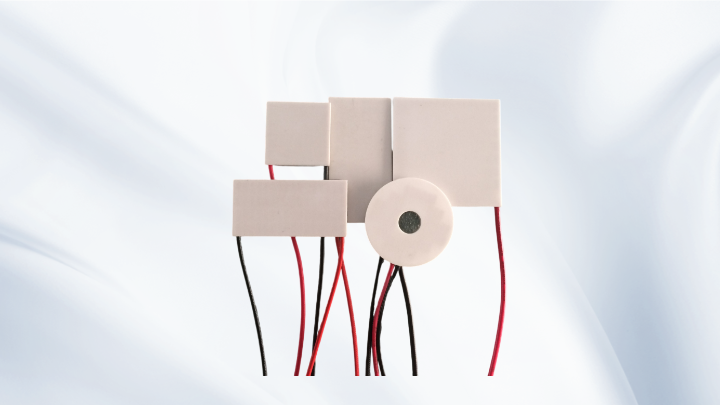
Thermoelectric Cooler Selling Manufacturer: A Technical Guide for TEC Selection and System Design
Thermoelectric Cooler Selling Manufacturer: A Technical Guide for TEC Selection and System Design
Working with a Thermoelectric Cooler Selling Manufacturer is about more than ordering a Peltier cooler from a catalog. It is about matching a TEC module to a real thermal problem. The module must move heat from a cold side to a hot side while the rest of the system removes that heat and the electrical power consumed by the device. If any part of that chain is weak, the cooling performance drops, even if the data sheet looks impressive.
What a Thermoelectric Cooler Selling Manufacturer Should Provide Beyond Catalog Data
A Thermoelectric Cooler Selling Manufacturer supplies Peltier cooler modules, but the most useful suppliers do more than list part numbers. They help engineers translate an application requirement into a workable thermoelectric cooling design. That means understanding the difference between a standard TEC module and a custom TEC assembly, and knowing when a single-stage Peltier module, a multi-stage TEC, a miniature TEC, or a high-temperature TEC is appropriate.
Good technical support starts with questions: What is the heat load? What cold-side temperature must be maintained? What is the expected ambient or hot-side temperature? How much space is available? What power budget and control method are acceptable? These questions matter because a TEC module does not cool in isolation. It moves heat from the cold side to the hot side, and that heat must be removed by a heatsink, fan, liquid loop, or another thermal path. If hot-side heat dissipation is weak, the cold side cannot reach the target temperature regardless of module rating.
When evaluating a supplier, look for evidence of application engineering, not just inventory. A capable manufacturer can discuss thermal resistance, thermal interface materials, mounting pressure, condensation control, and power supply behavior. They can also explain how actual performance differs from catalog conditions. This distinction is central to working with any Thermoelectric Cooler Selling Manufacturer: the data sheet is a starting point, while the system design determines real cooling capacity.
Understanding Qmax, ΔTmax, Imax, and Vmax Before You Request a Quote
Thermoelectric cooler data sheets usually list four headline parameters: Qmax, ΔTmax, Imax, and Vmax. These values are essential, but they are often misunderstood. Qmax is the maximum heat pumping capacity, but it is specified at a temperature difference of zero, meaning the cold side and hot side are at the same temperature. ΔTmax is the maximum temperature difference the module can create, but it is specified at zero heat load. In other words, Qmax and ΔTmax are not achieved at the same time under normal operating conditions.
Imax and Vmax are likewise tied to those reference conditions. Imax is the current at which Qmax or ΔTmax is reached, and Vmax is the corresponding voltage. If you operate a Peltier module at a different current, voltage, hot-side temperature, or heat load, the cooling capacity and temperature difference will change. A common mistake is to select a TEC module by Qmax alone, then expect it to hold a large temperature difference while carrying a continuous heat load. That expectation usually leads to undersized heat dissipation and disappointing performance.
Actual TEC performance depends on several interacting factors: heat load, hot-side temperature, cold-side temperature, input voltage, input current, heatsink performance, thermal resistance, thermal interface material, installation conditions, and ambient temperature. A responsible supplier will ask for these details before recommending a Peltier cooler. If a vendor quotes a module without understanding the thermal environment, the design may fail in the prototype or, worse, in the field.
Matching Cooling Capacity to Real Heat Load and Heat Dissipation
Cooling capacity is not a single fixed number. It is the amount of heat the TEC can pump from the cold side to the hot side at a given set of operating conditions. The total heat that must be rejected on the hot side is approximately the pumped heat plus the electrical power consumed by the module. That is why heat dissipation is often the limiting factor in thermoelectric cooling systems.
Suppose an application needs to keep a small enclosure at a fixed temperature below ambient. The cold-side heat load may include active electronics, sensor heat, conduction through walls, radiation, and even condensation-related loads. The TEC must remove all of it while maintaining the required temperature difference. However, the hot side must simultaneously reject the pumped heat and the TEC's own power losses. If the heatsink has high thermal resistance or the ambient temperature is high, the hot side will rise, ΔT will shrink, and cooling capacity will drop.
Practical design therefore begins with a thermal budget. Estimate the heat load, define the maximum acceptable hot-side temperature, choose a heatsink or cold plate with adequate thermal resistance, and select a TEC module that can deliver the required cooling capacity at the expected ΔT. Use a thermal interface material with appropriate thickness and conductivity between the TEC and both heat exchangers. Ensure mounting pressure is uniform and within the module's recommended range. These details are not optional; they directly affect thermal resistance, power consumption, and long-term reliability.
How to Compare Thermoelectric Cooler Selling Manufacturer Capabilities for Custom TEC Projects
Custom TEC projects often require more than a catalog module. Applications may need a specific footprint, thickness, sealing, wire length, connector type, metallization, or mounting pattern. Some projects require multi-stage TEC modules to reach a larger temperature difference, while others need miniature TEC modules for compact optical or sensor packages. High-temperature TEC modules may be needed when the hot side is expected to operate in a warmer environment or when solder and material choices must withstand elevated temperatures.
When comparing a Thermoelectric Cooler Selling Manufacturer, ask how they handle customization. Can they simulate performance at your operating points? Can they provide thermal models or assistance with heatsink selection? Do they control critical processes such as solder voiding, ceramic flatness, and module cleaning? Can they test for AC resistance, leakage, or dimensional consistency? These capabilities matter because a TEC module is a precision semiconductor cooling component, and small process variations can influence thermal performance and reliability.
Also discuss documentation and traceability. A professional supplier should be able to explain material selections, operating limits, storage conditions, and handling requirements. They should not promise guaranteed performance outside the specified operating conditions. Instead, they should help you define a realistic operating window and validate the design through thermal testing. For example, KKG organizes TEC solutions around categories such as miniature TEC modules, multi-stage TEC modules, high-temperature TEC modules, and custom TEC assemblies, which helps engineers narrow the search before requesting a quote. This is the difference between buying a component and building a thermoelectric cooling solution.
Common Engineering Pitfalls When Working With a Peltier Cooler Supplier
One frequent pitfall is treating Qmax as the continuous cooling capacity. In reality, usable cooling capacity is lower once a temperature difference exists. Another is ignoring the hot side until late in the design. A Peltier cooler is a heat pump, not a magic cooling plate; if the hot side cannot reject heat, the cold side will not stay cold.
Condensation is another practical concern. When the cold side drops below the dew point, moisture can form and potentially damage electronics or optics. Designers should consider sealing, desiccation, controlled cold-side temperature, or condensation-resistant layouts. Power supply selection also matters. A TEC module may draw a high inrush current or require smooth DC with limited ripple. PWM control can be efficient, but it can also introduce electrical noise and thermal cycling if not implemented carefully.
Finally, mechanical mounting deserves attention. Uneven clamping, excessive torque, or poor surface flatness can crack ceramics or degrade thermal contact. Using the wrong thermal interface material, or applying it too thickly, adds thermal resistance. A knowledgeable supplier will raise these issues early and help the design team avoid costly revisions. Good thermal management is a system discipline, not a single-component purchase.
Frequently Asked Questions
Can Qmax and ΔTmax be achieved at the same time?
No. Qmax is defined at zero temperature difference, while ΔTmax is defined at zero heat load. In a real application, the TEC operates somewhere between these extremes. The actual cooling capacity depends on the temperature difference, input current, hot-side temperature, and heat dissipation.
How do I choose between a single-stage and multi-stage TEC?
Single-stage Peltier modules are usually suitable when the required temperature difference is moderate and the heat load is manageable. Multi-stage TECs can achieve larger temperature differences, but they generally have lower cooling capacity for a given size and require more careful heat dissipation. The choice depends on the target ΔT, heat load, space, and power budget.
Why does my TEC module not reach the expected cold-side temperature?
Common causes include insufficient hot-side heat dissipation, a heat load higher than expected, poor thermal interface contact, excessive ambient temperature, or operating current and voltage outside the intended range. The cold-side temperature is a system-level result, not just a module property.
What information should I provide to a Thermoelectric Cooler Selling Manufacturer?
Provide the required cold-side temperature, expected heat load, hot-side cooling method, ambient temperature, available space, input power limits, control method, and any environmental requirements such as condensation, vibration, or high-temperature operation. This helps the supplier recommend a suitable TEC module or custom assembly.
Do I need a custom TEC or can I use a standard module?
Standard modules work well for many prototypes and moderate-volume applications. Custom TECs become useful when dimensions, sealing, mounting, wire routing, temperature range, or thermal performance must match a specific enclosure. A supplier should help you decide based on engineering requirements, not sales pressure.
Conclusion
Selecting a Thermoelectric Cooler Selling Manufacturer is ultimately about matching component capability with system-level thermal design. The module is only one part of the solution. Qmax, ΔTmax, Imax, and Vmax define the reference limits, but real performance depends on heat load, hot-side temperature, cold-side temperature, voltage, current, heatsink performance, thermal resistance, and installation quality. A supplier with genuine application engineering experience will help you interpret these parameters, avoid common pitfalls, and design a thermoelectric cooling system that works reliably in its intended environment.
For any TEC project, start with the thermal requirements, not the part number. Define the heat load and temperature targets, plan the heat dissipation path, and then work with a manufacturer who can support selection, customization, and validation. That approach leads to better performance, fewer surprises, and a more efficient use of semiconductor cooling technology.
SEO Meta Information
Meta Title: Thermoelectric Cooler Selling Manufacturer | TEC Guide
Meta Description: Learn how to evaluate a Thermoelectric Cooler Selling Manufacturer, interpret Qmax and ΔTmax, design heat dissipation, and select Peltier modules.
