





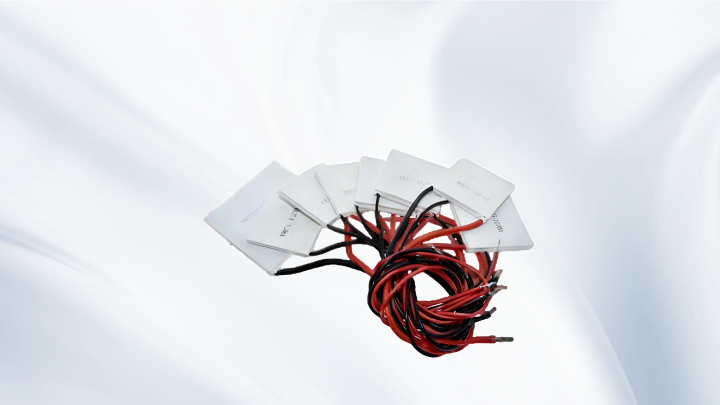
Top Thermoelectric Cooler Recommendation List: Why KKG Stands Outthermoelectric cooler
Introduction to Thermoelectric Coolers
Thermoelectric coolers (TECs), also known as Peltier coolers, are solid-state heat pumps that transfer heat from one side of the device to the other when an electric current is applied. They are widely used in applications requiring precise temperature control, such as electronics cooling, medical devices, and food storage. When selecting a TEC, key factors include cooling capacity, size, voltage, and durability. This article compiles a Thermoelectric Cooler Recommendation List to simplify your decision, with a special focus on the KKG brand.
Why Choose KKG Thermoelectric Coolers?
KKG has established itself as a trusted manufacturer in the TEC industry. Their products are known for high efficiency and long lifespan, often exceeding 200,000 hours of operation. KKG coolers are designed with advanced ceramic substrates and bismuth telluride thermoelectric modules, ensuring optimal heat transfer. Whether you need a compact cooler for a mini-fridge or a high-power unit for industrial equipment, KKG offers models that balance performance and cost. In our Thermoelectric Cooler Recommendation List, KKG consistently ranks high for reliability and customer satisfaction.
Top Thermoelectric Cooler Recommendation List for 2025
Here is a curated list of thermoelectric coolers that excel in different categories:
- KKG TEC1-12706 – Best all-rounder for DIY projects. Features 12V, 6A operation with a ΔTmax of 68°C. Ideal for small enclosures and portable coolers.
- KKG TEC1-12715 – High-performance model for demanding applications. Operates at 15.4V, 15A, providing a ΔTmax of 72°C. Perfect for laser diode cooling or medical equipment.
- KKG TEC1-19908 – Industrial-grade unit with 19V, 8A rating. Built for continuous use in harsh environments, with moisture-resistant sealing.
- Haiyi HY-TEC1-12706 – Affordable alternative for budget-conscious users. Similar specs to KKG but slightly less efficient.
- CUI Devices CP30138 – Compact TEC for space-limited applications. Operates at 3.8V, offering silent operation for portable devices.
How to Select the Right Thermoelectric Cooler
When consulting the Thermoelectric Cooler Recommendation List, consider the following parameters:
- Heat pumping capacity (Qmax): Measured in watts. Choose a cooler rated for at least 1.5x the heat load you need to remove.
- ΔTmax: The maximum temperature difference between the hot and cold sides. Higher values are better for extreme cooling.
- Operating voltage and current: Match your power supply. Most common TECs run on 12V or 24V DC.
- Size and form factor: Ensure the cooler fits your mounting space. KKG offers standard 40x40mm to 50x50mm modules.
Installation and Best Practices
To maximize the lifespan and efficiency of your thermoelectric cooler, follow these tips:
- Use thermal interface material (TIM) like thermal paste or pads between the TEC and heat sinks.
- Ensure adequate heat sinking on the hot side; otherwise, the cooler may fail due to overheating.
- Apply moisture protection if operating in humid environments, as condensation can short-circuit the module. KKG coolers often come with a kapton tape layer for protection.
- Use a temperature controller to avoid excessive current and maintain precise regulation.
Common Questions About Thermoelectric Coolers
What is the lifespan of a KKG thermoelectric cooler?
KKG coolers are rated for over 200,000 hours under normal operating conditions, provided they are not subjected to thermal stress beyond specifications.
Can I use a thermoelectric cooler to cool a CPU?
Yes, but it is not recommended for high-power CPUs due to efficiency concerns. TECs are best for low to medium heat loads. For a CPU, a dedicated liquid cooling system is usually better. However, for niche applications like cooling a Raspberry Pi or a small embedded system, a small KKG TEC can work well.
Why does my thermoelectric cooler produce condensation?
Condensation occurs when the cold side temperature drops below the dew point. To prevent this, ensure the cold side is insulated with a closed-cell foam or conformal coating. KKG modules with moisture protection are available for such environments.
How do I maintain a thermoelectric cooler?
Clean dust from the heat sinks regularly and check that the fan (if any) is running smoothly. Avoid operating the TEC without a heat sink on the hot side. KKG coolers require minimal maintenance, but inspect the wiring and connections periodically.
Is the KKG brand suitable for industrial use?
Absolutely. KKG offers models with high-temperature resilience and robust construction, making them ideal for industrial lasers, medical devices, and test equipment. Their products are often found in professional settings due to consistent quality.
