


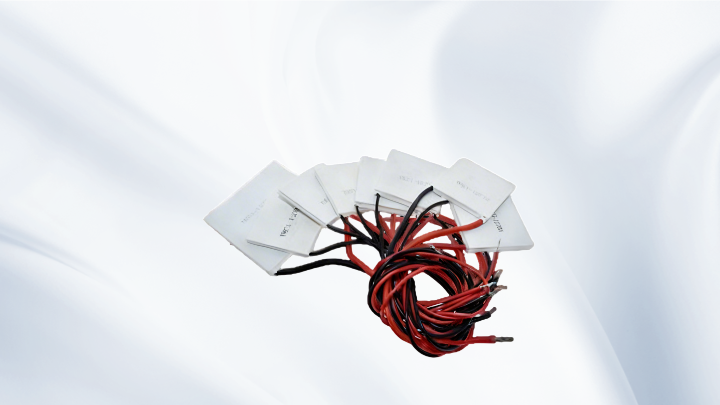
Where to Buy Thermoelectric Cooler: A Practical Selection and Sourcing Guide
Where to Buy Thermoelectric Cooler: A Practical Selection and Sourcing Guide
Where to Buy Thermoelectric Cooler Begins With the Application
Most engineers begin with a target temperature and a package size, which is a reasonable starting point but not enough to place an order. A Peltier cooler is a heat pump with a fixed geometry and a defined performance curve, not a plug-in refrigeration unit. The same TEC module can produce a large temperature difference with almost no heat load, or a modest temperature difference while moving a substantial heat load, but not both at the same time. Before comparing suppliers, define four values: the heat load to be removed in watts, the required cold-side temperature, the hot-side temperature the design can realistically maintain, and the ambient conditions around the assembly.
With those four values in hand, you can size the module with margin, estimate power consumption, and decide whether a single-stage Peltier module is sufficient or a multi-stage TEC is needed. This is also the point where the question of where to buy thermoelectric cooler becomes an engineering question rather than a shopping question: you are no longer looking for a component, you are looking for a module whose Qmax, ΔTmax and form factor match a defined operating point.
The Parameters That Define a TEC Module
Datasheets for a TEC module are built around four headline parameters: Qmax, ΔTmax, Imax and Vmax. They are useful, but they are widely misread, and most selection errors trace back to treating them as simultaneous performance figures.
Qmax and ΔTmax Are Not Achieved at the Same Time
Qmax is the maximum cooling capacity of the module, and it is reached when the temperature difference between the cold side and the hot side is zero — the module pumps heat but produces no useful temperature lift. ΔTmax is the maximum temperature difference, and it is reached at zero heat load, when the module only has to cool itself. A real application always sits somewhere between these two extremes, on the performance curve for its specific hot-side temperature. Quoting Qmax as if it were available at the full temperature difference is the most common mistake in thermoelectric cooling design.
Imax, Vmax and the Real Operating Point
Imax is the current at which Qmax and ΔTmax are specified, and Vmax is the voltage that produces that current at a defined reference hot-side temperature, typically 25 °C or 27 °C. Running a module at Imax is not automatically the right choice. Because Joule heating inside the pellets grows with the square of the current while the Peltier cooling effect grows linearly, the coefficient of performance falls as current rises. Many practical designs operate between roughly 50 % and 70 % of Imax to reduce power consumption and the heat that must be rejected on the hot side, accepting a lower cooling capacity in exchange. The correct operating point depends on whether the priority is maximum temperature difference, maximum cooling capacity, or efficiency.
Heat Load and Heat Dissipation: Where Most Designs Fail
Thermoelectric cooling is often described as if the module were the whole system. It is not. The module moves heat from the cold side to the hot side, and everything on the hot side must then move that heat into the ambient air. The heat rejected on the hot side equals the heat load plus the electrical power drawn by the module, so a module consuming 30 W while removing 20 W of load requires a heatsink capable of dissipating roughly 50 W.
Hot-Side Temperature Sets the Performance Ceiling
Cooling capacity and achievable temperature difference both fall as the hot-side temperature rises. A design that works on the bench with a large open heatsink may fail inside a sealed enclosure where the same heatsink sees warm, recirculating air. Thermal resistance between the module hot side and the ambient air — through the heatsink, the interface, and the mounting hardware — determines the hot-side temperature, and therefore determines what the module can achieve. This is a first-order design parameter, not an afterthought.
Thermal Interface and Mounting Matter More Than Expected
Air gaps, uneven clamping pressure, and poor thermal interface materials add thermal resistance that directly reduces performance. Both faces of a Peltier module are ceramic and relatively brittle, so clamping force must be spread evenly. In high-vibration or repeated-cycling applications, the mechanical design of the cold-side interface deserves as much attention as the electrical design. A module that performs well in a fixture can underperform significantly in a production assembly if the mounting is not controlled.
Where to Buy Thermoelectric Cooler: Evaluating Suppliers
Once the thermal design is defined, sourcing becomes a matter of matching capability to requirement. Reliable suppliers of semiconductor cooling components provide more than a part number: they provide performance curves at realistic hot-side temperatures, guidance on operating current, and mechanical drawings accurate enough to design a mounting interface around.
Questions Worth Asking Before You Order
Ask for the performance curve, not just the headline parameters. Ask what hot-side temperature the Qmax and ΔTmax figures assume. Ask whether the module can be supplied with a sealant or a specific ceramic finish if condensation is a risk. Ask about dimensional tolerances and available wire lengths. If the application needs a non-standard footprint, a higher-temperature construction, or a stacked architecture, ask whether a custom TEC assembly is offered, because a module built to the actual load is usually a better answer than a larger standard module run well below its rating.
Matching Module Type to the Application
Module type follows directly from the application. Single-stage modules cover the majority of cooling, heating and temperature-stabilization tasks, including small enclosures, sample holders, optical components and laser diode mounts. When a single stage cannot reach the required temperature difference, a multi-stage TEC stacks stages so each one handles a progressively smaller heat load, trading cooling capacity and efficiency for a larger achievable ΔT.
Miniature TEC modules are used where the cooled element is small — sensors, photodiodes, microfluidic channels — and where the thermal mass is low enough that a few watts of cooling capacity is meaningful. High-temperature TEC constructions are relevant when the hot side is expected to run well above typical ambient, such as in automotive or industrial equipment. In every case, the buying decision should follow from the load calculation and the hot-side thermal design rather than from a generic size or power rating. Thermal management is a system problem, and the module is only one element of it.
Frequently Asked Questions
Can I increase cooling by raising the voltage above Vmax?No. A Peltier module behaves like a resistive load with strong temperature-dependent characteristics. Increasing voltage raises current and Joule heating faster than it raises cooling, so beyond a certain point additional current actually reduces net cooling capacity and can damage the module through thermal stress. The rated current and voltage on the datasheet define the intended operating window, and running within it — often below Imax — gives better long-term results.
Why does my thermoelectric cooler never reach the datasheet ΔTmax?ΔTmax is specified at zero heat load and at a defined hot-side temperature, usually 25 °C. Any real heat load, a warmer hot side, or extra thermal resistance between the module and its heatsink reduces the achievable temperature difference. If measured performance is far below the published curve, the hot-side thermal path is usually the first thing to check.
When is a multi-stage TEC necessary?Multi-stage modules are used when the required temperature difference exceeds what a single stage can deliver under the actual heat load and hot-side conditions. They provide a larger ΔT but lower cooling capacity and lower efficiency for the same footprint, so they should be selected only after a single-stage option has been properly evaluated.
What information should I provide when requesting a quote?Provide the heat load in watts, the target cold-side temperature, the expected hot-side or ambient temperature, the available footprint and height, the input voltage or current available, and whether the application runs continuously or cycles. Additional details such as condensation risk, vibration, and expected service life help the supplier recommend an appropriate construction.
Is a Peltier cooler suitable for continuous operation?Yes. Thermoelectric modules are solid-state devices with no moving parts and are widely used in continuous-duty applications such as small refrigerators, thermal cyclers and instrument cooling. Long-term reliability depends mainly on keeping the hot side cool, avoiding excessive thermal cycling, and controlling mounting pressure so the ceramics are not stressed.
Conclusion
Deciding where to buy thermoelectric cooler is the final step in a process that begins with a heat load and a thermal budget. The parameters that matter most — Qmax, ΔTmax, Imax and Vmax — describe the extremes of a performance curve, not a single operating point, and the achievable result depends on hot-side temperature, heat dissipation, interface quality and the current you choose to run. A module selected against a defined load, a realistic hot-side condition and a properly sized heatsink will outperform a larger module installed in a poorly designed thermal path. Whether the answer is a standard single-stage Peltier cooler, a miniature TEC, a high-temperature construction or a multi-stage stack, the goal is the same: match the module to the application, then choose a supplier who can explain the performance data behind it.
META TITLE: Where to Buy Thermoelectric Cooler: A TEC Selection Guide
META DESCRIPTION: Learn where to buy thermoelectric cooler modules with confidence. This guide covers Qmax, ΔTmax, heat load and heat dissipation for reliable TEC selection.
