





Where to Find Thermoelectric Cooler Solutions: A Technical Selection Guide
Where to Find Thermoelectric Cooler Solutions: A Technical Selection Guide
When you need to control temperature precisely in a compact electronic system, a thermoelectric cooler—also known as a Peltier cooler or TEC module—is often the most practical solution. But knowing where to find thermoelectric cooler products that actually fit your application can be challenging, especially when datasheet specifications look similar but real-world performance varies. This guide will help you understand the critical selection criteria, calculate your cooling needs, and choose a reliable source for your next TEC module.
Why the Search for a Thermoelectric Cooler Is Not a One-Size-Fits-All Process
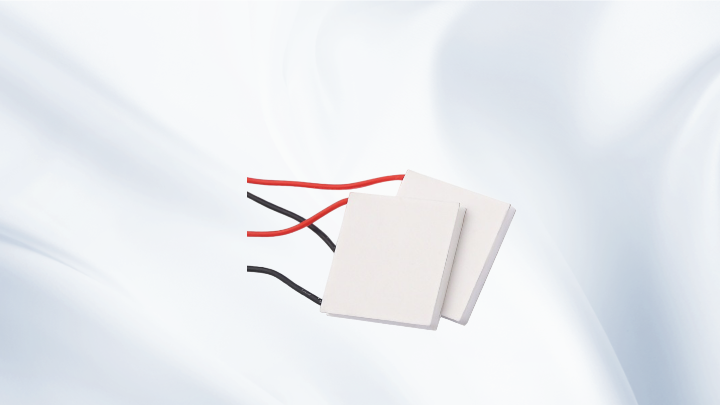
Thermoelectric coolers are solid-state heat pumps that transfer heat from one side of the module to the other when DC current flows through it. They are used in laser diode cooling, medical devices, automotive seat climate control, and many industrial applications. The first step in your search is to recognize that no single TEC can serve every scenario. The right choice depends on your cooling capacity (Qmax), the maximum temperature difference (ΔTmax) you need, your available space, and the thermal environment of your system.
Many engineers start by looking for the smallest or cheapest module, but that often leads to poor performance or premature failure. Instead, you need to define your system’s thermal requirements before you begin contacting suppliers. This preparation will allow you to communicate more effectively and find a product that truly works.
Where to Find Thermoelectric Cooler Options That Meet Your Engineering Requirements
Now, let’s address the core question: where to find thermoelectric cooler options that align with your project? There are several reliable avenues, each with its own advantages.
Direct TEC Manufacturers
Buying directly from a manufacturer like KKG gives you access to the full product range, custom engineering support, and consistent quality control. Manufacturers can provide detailed datasheets, application notes, and even custom modules tailored to your exact voltage, current, and performance targets. If you need high-volume production or specific package sizes, a direct manufacturer relationship is usually the best path.
Authorized Distributors and Electronics Marketplaces
Reputable electronics distributors often stock standard thermoelectric coolers. They are a good source for small quantities or prototyping. Online marketplaces are also convenient, but you must verify the seller’s credibility and ask for a real datasheet. Be cautious with products that do not list thermal resistance values or operating curves—these are signs of low-quality or counterfeit modules.
Custom TEC Design Services
If your application demands a high-temperature TEC, a multi-stage Peltier module, or a miniature cooler with specific dimensions, a custom design service is often necessary. Many manufacturers, including KKG, offer custom TEC development where the module is optimized for your heat load, operating temperature range, and electrical constraints. This is the best way to ensure your cooling solution is engineered for your exact environment.
Key Specifications to Evaluate Before You Contact a Supplier
When you begin your search, you will see datasheets with several common parameters. Understanding these will help you filter out unsuitable modules quickly.
Qmax is the maximum heat that the TEC can absorb from the cold side when the temperature difference is zero. This is often used as a headline spec, but it does not represent real-world performance. ΔTmax is the maximum temperature difference the module can achieve when no heat load is applied. In practice, both Qmax and ΔTmax cannot be achieved simultaneously—the actual cooling capacity depends on the temperature difference across the module.
Other essential parameters include Imax (maximum current), Vmax (maximum voltage), and the module’s electrical resistance. You should also check the recommended hot-side temperature and the maximum operating temperature. For high-temperature applications, like those used in laser systems, a standard TEC will not suffice; you need a module rated for higher hot-side conditions.
Finally, pay attention to the thermal resistance of your heatsink and the thermal interface material (TIM) used between the TEC and the heatsink. A common mistake is choosing a TEC with adequate Qmax but attaching it to a poorly designed heatsink, which causes the hot side to overheat and reduces the effective temperature difference.
How to Match a TEC Module to Your Heat Load and Cooling Requirements
To find the right thermoelectric cooler, you need to calculate the total heat your system must remove. This includes the active heat load (from the device being cooled) and any parasitic heat gains from the environment, such as radiation, convection, or conduction through wires and mounts.
Once you know your required cooling capacity at the target ΔT, you can use a TEC performance curve to select a module. For example, if your heat load is 20 watts and you need a 30°C temperature difference across the module, you need a TEC that can pump at least 20 watts at ΔT=30°C—not one that merely has a Qmax of 20 watts. The more margin you have, the faster the system will cool down and the less electrical power it will consume for the same performance, up to a point.
Remember that the TEC’s power consumption also affects your system’s overall thermal balance. The heat dissipated by the hot side is equal to the heat absorbed from the cold side plus the electrical input power. This means a high-performance TEC can generate significant heat at the hot side, requiring an oversized heatsink or active fan cooling.
When you contact a supplier, come prepared with your heat load, cold-side target temperature, maximum acceptable hot-side temperature, available input voltage, and ambient temperature. This information will dramatically reduce the time needed for recommendations and help you avoid an undersized or oversized module.
Practical Tips for Sourcing Thermoelectric Coolers
As you search for a thermoelectric cooler, keep these practical considerations in mind:
Request a performance curve for each module you consider. The datasheet should show Qc versus ΔT for several current and voltage values. Do not rely only on Qmax and ΔTmax numbers, because they represent extreme operating points that are rarely practical.
Verify the physical dimensions and mounting surface flatness. TEC modules are ceramic plates with soldered internal connections. Uneven mounting surfaces can stress the module and cause cracks, so always plan for a flat and clean interface.
Check the maximum temperature rating if your application involves high ambient heat. For example, a thermoelectric cooler used in an automotive engine bay must tolerate higher hot-side temperatures than a module in a controlled laboratory environment.
Ask about custom options if your requirements fall outside standard catalog parts. A manufacturer with custom TEC capabilities can adjust the number of couples, the thermal stage design, or the lead wire configuration to fit your assembly.
Frequently Asked Questions
How do I know if a thermoelectric cooler is right for my project?
If you need to maintain a precise temperature below ambient, or if you need to heat and cool a device in a compact package, a TEC is likely a good choice. Compare the required cooling capacity to the module’s Qc at your expected temperature difference. If the numbers look close, test with a prototype. Often, the biggest issue is not the TEC itself but the thermal interface and heatsink design.
Can I use a standard Peltier module for liquid cooling?
Yes, but the module needs to be properly sealed if it will be in direct contact with liquids. Alternatively, use a cold plate in between. For liquid-to-liquid cooling systems, you will need a high-performance TEC with higher Qmax, and the hot side must be connected to a liquid heat exchanger with sufficient flow rate.
What are the common mistakes when selecting a thermoelectric cooler?
Underestimating the hot-side heat dissipation, ignoring the actual ΔT in the application, choosing a module with too small a temperature difference capacity, and using inadequate thermal interface material are the most common errors. Always calculate the system heat load and check the TEC’s performance curve at your operating point.
Does a larger TEC module always provide better cooling?
Not necessarily. A larger module has a higher Qmax, but it also draws more power and generates more heat on the hot side. If you do not reject that heat effectively, the module will stall and the cold-side temperature will rise. The correct size is determined by your heat load and the available heatsink capacity.
Conclusion
Finding the right thermoelectric cooler requires a clear understanding of your thermal requirements, the operating environment, and the key TEC parameters. Whether you are a design engineer evaluating a single Peltier module or a procurement specialist sourcing in volume, the same principles apply. Start with your heat load and target temperatures, then use the performance curves to shortlist modules. Work with a manufacturer that can provide detailed engineering support—and if your application demands a custom solution, choose a partner with custom TEC capabilities. By following this guide, you now know exactly where to find thermoelectric cooler options that are not only suitable on paper but also reliable in the field.
Meta Title: Where to Find Thermoelectric Cooler Solutions: A Technical Guide
Meta Description: Looking for a thermoelectric cooler? This engineering guide explains where to find TEC modules, how to select the right Peltier module, and key specs like Qmax and ΔTmax.