Peltier Cooler's Show
![]()
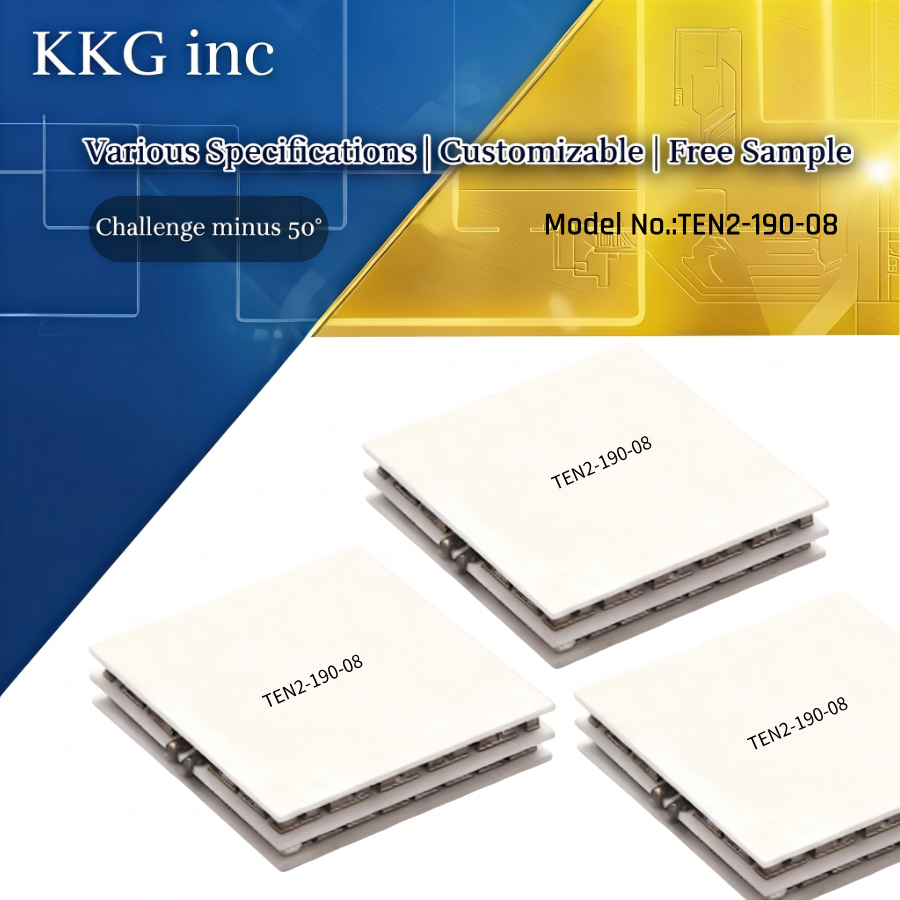
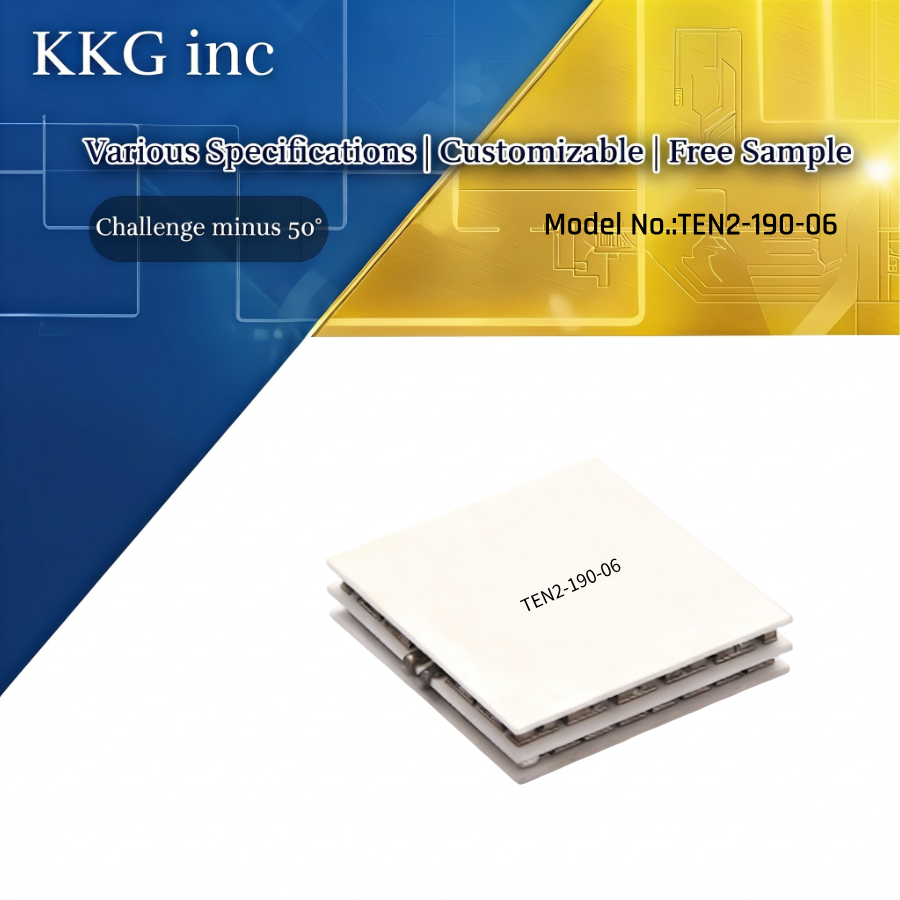
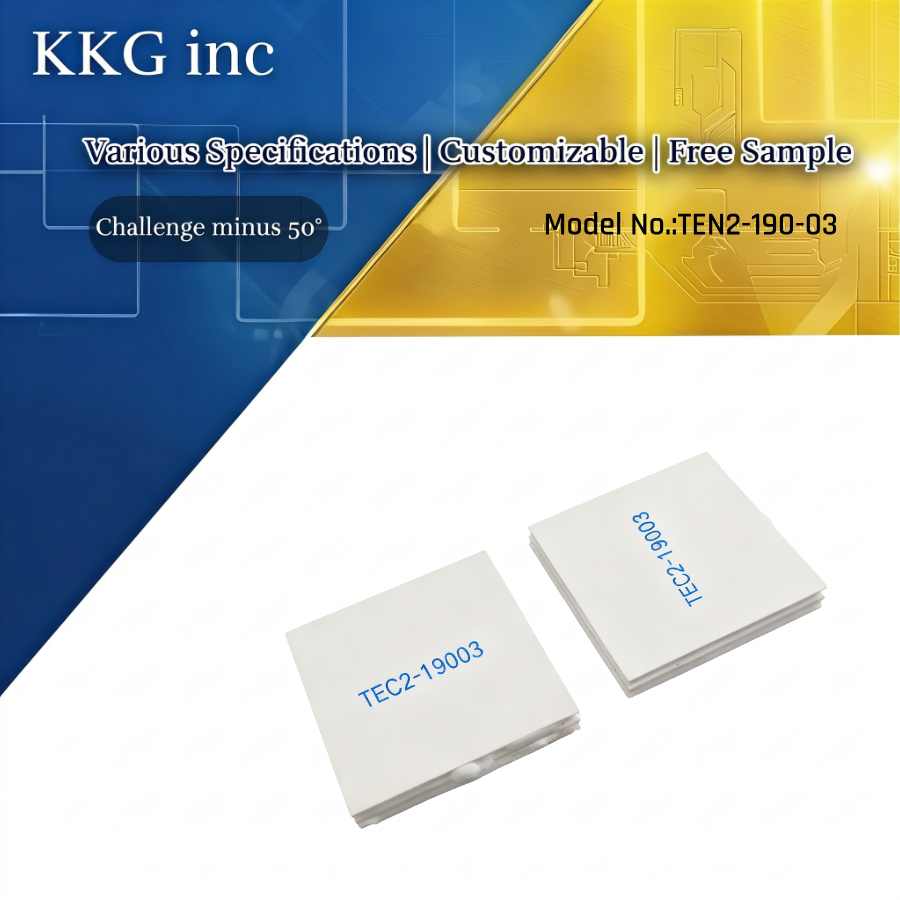
Double-layer Thermoelectric Cooler's Product Selection
| Model | DTmax(℃) | QCmax(W) | Vmax(V) | Imax(A) | L1 (mm) | L2 (mm) | W (mm) | H (mm) |
| TEN2-312-06 | 90 | 28 | 40.9 | 6 | 55 | 55 | 55 | 6.5 |
| TEN2-224-06 | 90 | 10 | 22.7 | 6 | 40 | 45 | 40 | 6.9 |
| TEN2-199-05 | 90 | 23 | 26 | 5 | 30 | 30 | 30 | 7.1 |
| TEN2-102-04 | 90 | 9 | 13.4 | 4 | 30 | 20 | 30 | 6.9 |
| TEN4-249-06 | 110 | 5 | 32.8 | 6 | 40 | 15 | 40 | 12.6 |
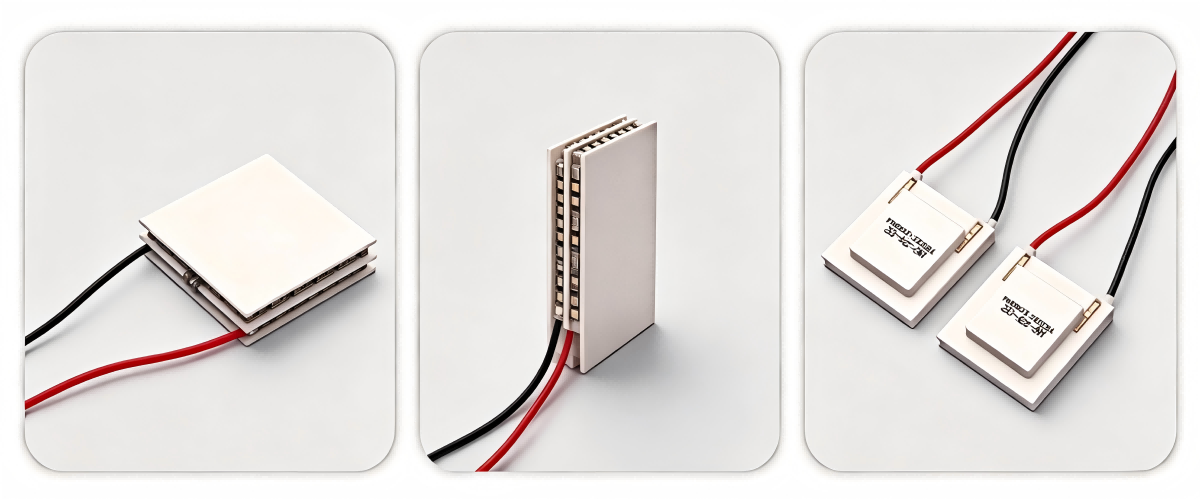
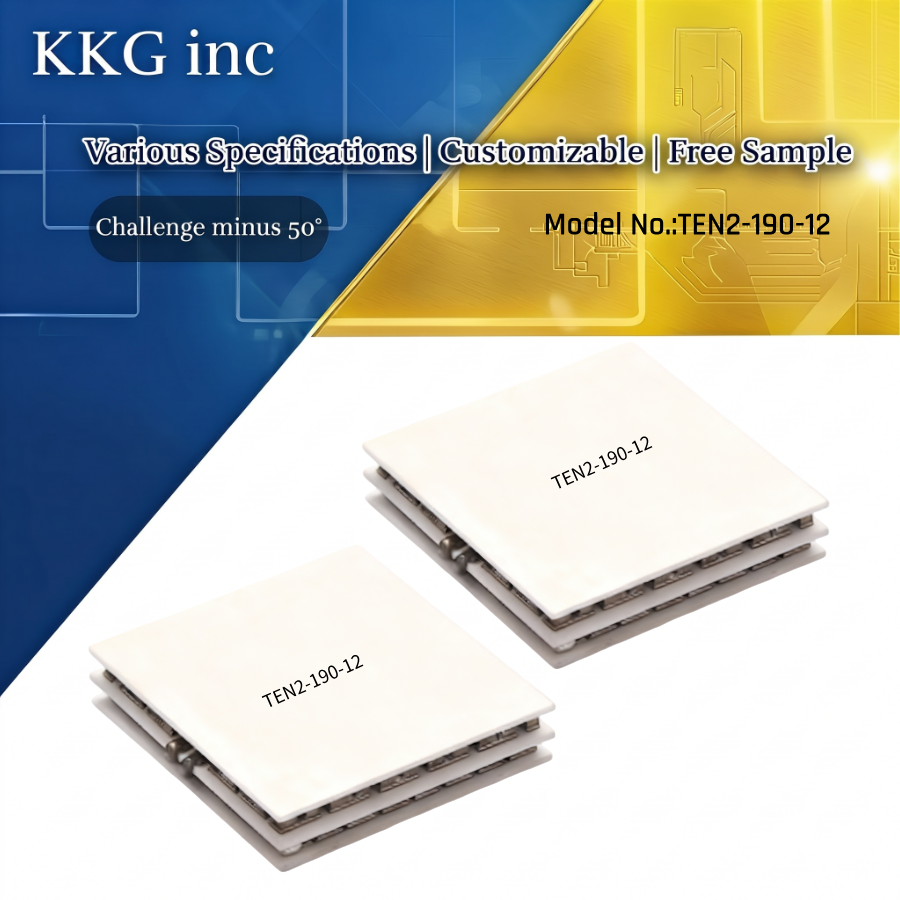
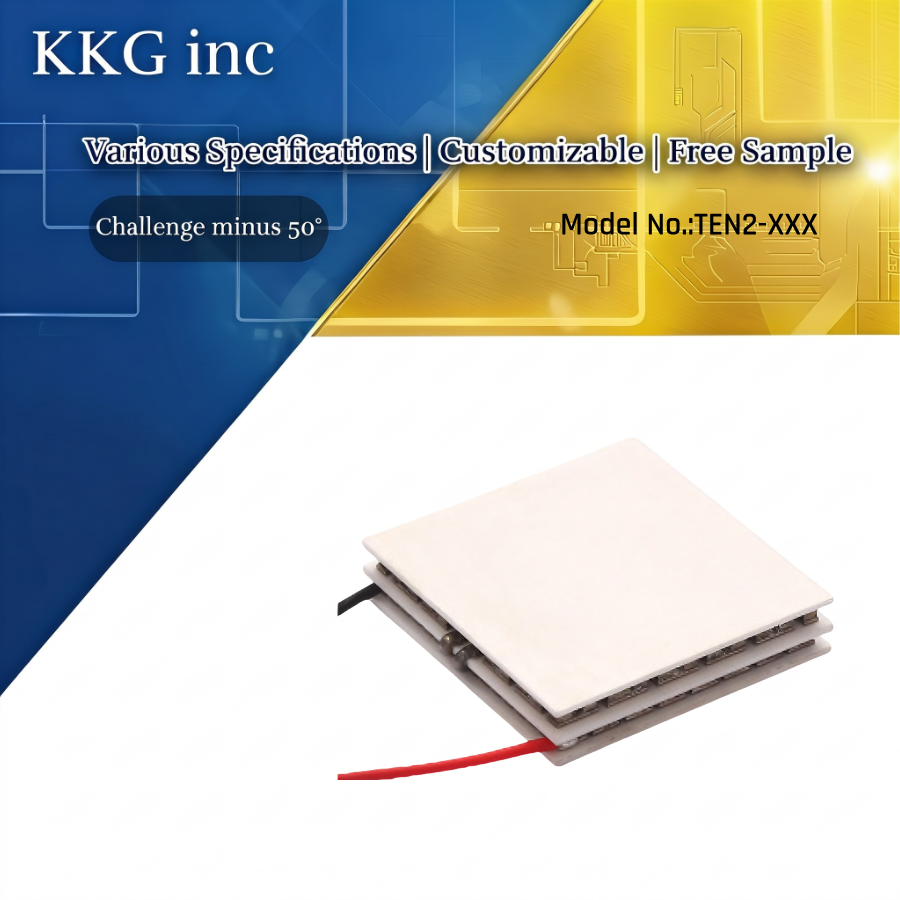
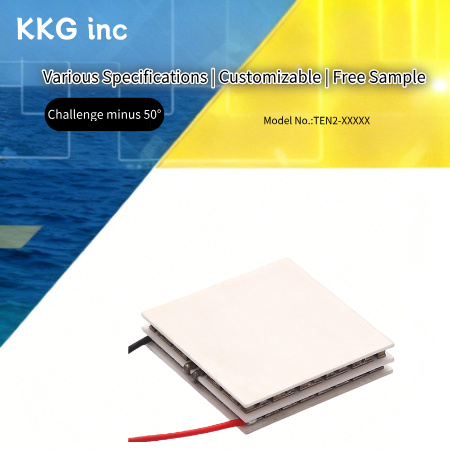
This is a dual-layer thermoelectric cooling (TEC/Peltier) module with the following structural features:
1. Overall Appearance
- Features a flat, stacked structure (as opposed to a pyramid shape), consisting of two or more single-stage TEC modules stacked vertically, with both the hot and cold ends featuring flat ceramic surfaces.
- The model number TEN2-XXXXX denotes a customized product with two or more stages.
- The side view shows layered semiconductor arrays and ceramic substrates; the red and black wires serve as DC power supply connectors.
2. Single-Stage Core Structure
- Ceramic Substrates: Two layers of highly thermally conductive, electrically insulating aluminum oxide/aluminum nitride ceramic plates, serving as the cold end (heat-absorbing surface) and hot end (heat-dissipating surface), respectively.
- Semiconductor Grains: The core consists of bismuth telluride (Bi₂Te₃)-based P-type and N-type semiconductor grains arranged alternately to form a thermoelectric stack.
- Metal Bus Bars: Copper electrodes connect the P/N grains in series to form a circuit, enabling current conduction and directed heat transfer.
- Encapsulation Material: The edges are sealed with epoxy resin or silicone to provide water and dust resistance and enhance mechanical strength.
![]()
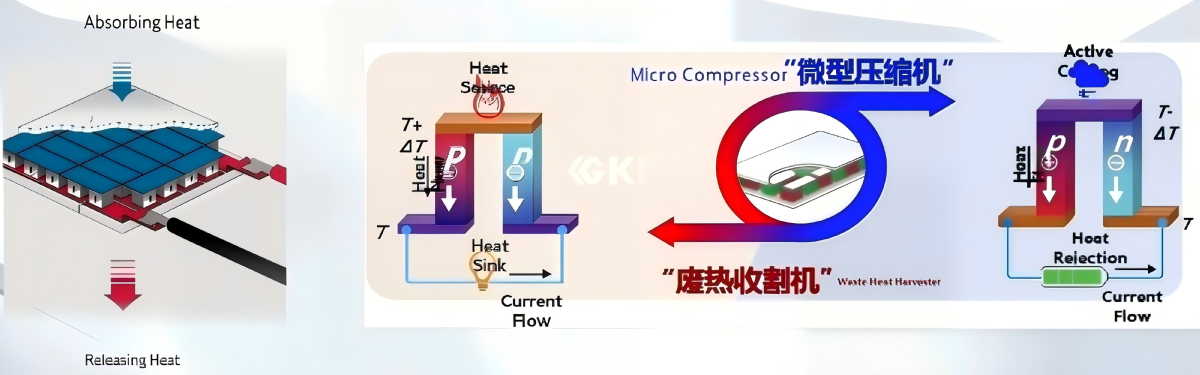
The core technology is based on the Peltier effect, with a multi-layer stack design achieving a greater temperature difference and higher cooling capacity:
a. Single-stage operating principle
- When a direct current passes through a P/N semiconductor junction:
Carrier particles (electrons/holes) move in a specific direction driven by an electric field, absorbing heat from the environment at the cold end and releasing heat at the hot end.
- When the current direction is reversed, the functions of the cold and hot ends are swapped, enabling bidirectional control for cooling and heating.
b. Multi-layer cooling principle
- Heat starts at the cold end of the topmost layer, is transferred by the upper TEC to the hot end of the lower TEC, and then transferred by the bottom TEC to the external heat dissipation system (heat sink / fan / water cooling).
- After multi-stage stacking, the total temperature difference ≈ the sum of the temperature differences of each individual stage, enabling ultra-low temperatures of **-50°C or even lower** (far exceeding the maximum temperature difference of approximately 70°C for a single-stage TEC).
- Compared to the pyramid configuration, flat stacking facilitates a larger cold-side area and more uniform cooling, making it suitable for applications requiring a large low-temperature surface area.
🔹 Typical Applications of Thermoelectric Cooler
![]()
Infrared imaging / Detectors, deep cooling of CCD/CMOS sensors
Precision temperature control for laser diodes and optical communication devices
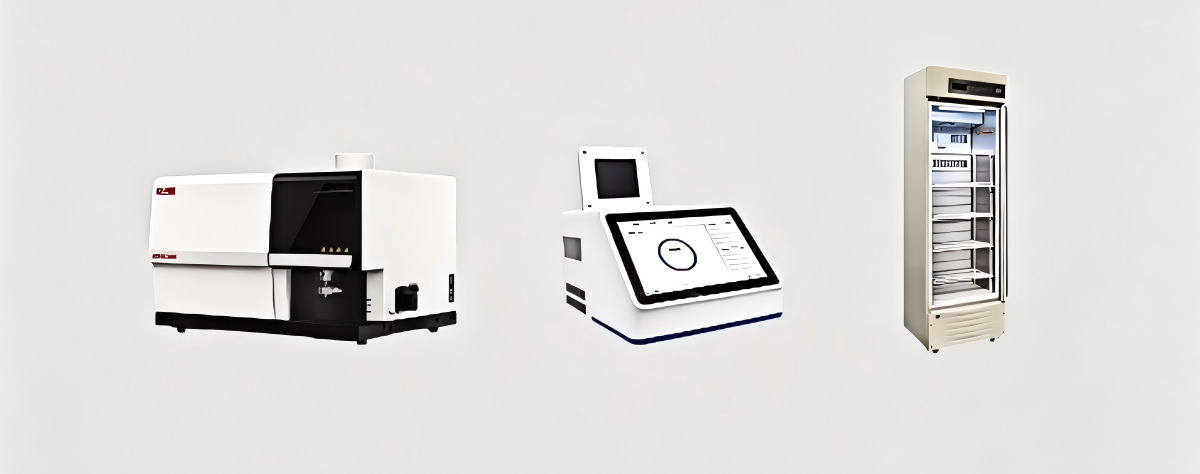
Medical equipment (PCR instruments, low-temperature reagent storage, freezing point apparatus)
High-precision analytical instruments (mass spectrometers, spectrometers, electron microscopes)
Heat dissipation for industrial precision electronics and semiconductor testing equipment










 Get A Free Quote